









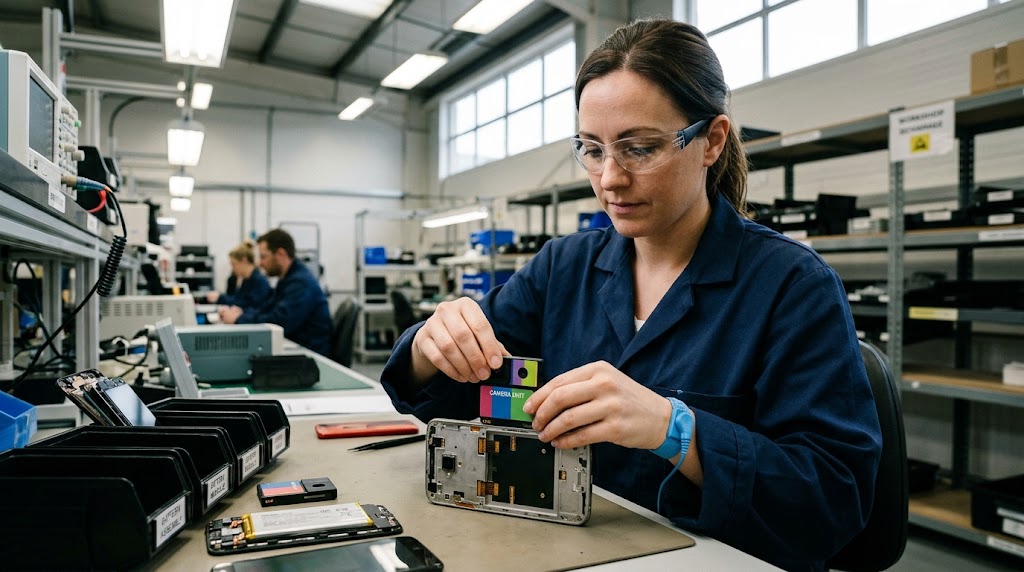
For more than a decade, the consumer technology industry has flirted with an alluring utopian ideal: the modular smartphone. In this vision, a mobile phone is no longer a disposable, glued-together block of glass and aluminum destined for a landfill after thirty-six months. Instead, it is an open architectural frame—an endoskeleton where displays, batteries, camera sensors, and processing units can be unclipped, upgraded, or repaired by an average user sitting at a kitchen table with a single standardized screwdriver.
The concept promised to dismantle the relentless cycle of planned obsolescence, slash the world’s burgeoning multi-million-ton electronic waste crisis, and return agency to consumers tired of paying four-figure sums for incremental annual upgrades. Projects like Google’s defunct Project Ara once captured the public imagination with promises of Lego-like customization, while pioneering independent firms like Europe’s Fairphone proved that ethically sourced, user-repairable devices could actually be manufactured and brought to market.
Yet, as the global smartphone market processes over 1.2 billion unit sales annually, repairable and modular electronics remain a fractional sub-segment of global hardware commerce. The overwhelming majority of smartphones sold worldwide are monolithic, sealed units—fused shut with industrial adhesives, engineered with proprietary components, and designed to make independent disassembly a high-risk venture.
With environmental regulations tightening across major economies and consumer replacement cycles stretching to historic lengths, the technology sector stands at a critical crossroads. Can the modular, highly repairable pipeline ever scale beyond a boutique niche of eco-conscious enthusiasts to conquer the mass market? Or do the unyielding laws of structural physics, supply chain economics, and consumer purchasing psychology mean that monolithic devices will permanently dominate the global tech landscape?
The Physics and Engineering of Swappable Silicon
To understand why modular smartphones have struggled to dominate retail shelves, one must first look at the relentless physical compromises demanded by modern mobile engineering. In the high-stakes arena of consumer electronics, physical volume is the ultimate luxury currency. Every cubic millimeter inside a smartphone chassis is contested ground where batteries, camera optics, thermal spreaders, and logic boards compete for space.
Mainstream flagship devices achieve their paper-thin profiles, vast battery capacities, and high performance through extreme physical integration. Silicon manufacturers construct multi-layer printed circuit boards where processing cores, memory modules, and power management integrated circuits are soldered directly onto the board in microscopic proximity. This dense integration minimizes signal trace lengths, reduces heat resistance, and maximizes the volume available for the battery.
Modular design violently disrupts this spatial efficiency. Connecting a swappable component to a central motherboard requires physical sockets, mechanical latches, reinforced plastic housings, and flex-cable interposers. A modular camera or removable battery assembly requires its own protective structural casing, adding noticeable thickness and weight compared to a component glued directly into a sealed chassis.
Furthermore, high-frequency computing introduces severe electromagnetic challenges. Modern 5G radio arrays, high-bandwidth LPDDR memory, and rapid flash storage transport data across circuit boards at multi-gigahertz frequencies. Routing these sensitive high-speed signals through detachable mechanical connectors rather than permanent solder joints introduces impedance mismatches, signal degradation, and electromagnetic interference. To compensate, engineers must add shielding and signal-amplifying circuitry, further inflating the device’s internal dimensions.
Waterproofing presents another monumental engineering hurdle. Mainstream consumers have come to expect high ingress protection ratings, allowing devices to survive full submersion in water. Fused-glass sandwiches achieve this through continuous liquid adhesive beads and compression seals. Conversely, a modular device featuring user-accessible panels and swappable ports must rely on perimeter rubber gaskets, mechanical O-rings, and screw-down tension plates. While achieving basic splash resistance is feasible, matching the rugged, airtight sealing of a glued monolithic frame without adding significant volumetric bulk remains an extraordinary mechanical challenge.
The Regulatory Shift: How the EU Rewrote the Rules
Where consumer demand and engineering friction previously stalled the repairability movement, international regulation has stepped in as an aggressive market catalyst. The European Union has taken the global lead in dismantling the legal and structural barriers that historically protected monolithic product design.
The EU Right to Repair Directive, alongside expanded Ecodesign regulations, has permanently altered the regulatory baseline for hardware manufacturers doing business in Western Europe. The legislation mandates that electronics manufacturers must provide spare parts, diagnostic software, and official repair manuals to independent repair shops and end-users at reasonable, non-discriminatory prices for up to ten years after a device model is retired from the market.
Crucially, European regulators have taken aim at one of the industry’s most controversial practices: software-based “part-pairing.” For years, major original equipment manufacturers (OEMs) embedded cryptographic serial numbers into individual internal components—such as displays, batteries, and camera modules. If an independent technician swapped a broken screen with a genuine replacement part from another device, the phone’s operating system would detect a serial mismatch, disabling key features like biometric security, automatic brightness, or battery health analytics.
The EU’s legal framework prohibits manufacturers from using software or hardware techniques that artificially impede the installation of compatible spare parts, effectively neutralising part-pairing restrictions across member states. Furthermore, upcoming European battery mandates require that portable batteries in consumer electronics must be easily removable and replaceable by end-users using basic, commercially available tools, firing a direct warning shot at the industry’s reliance on permanent chemical adhesives.
This regulatory pressure is forcing a dramatic re-evaluation inside the engineering departments of major tech conglomerates. While mainstream giants like Apple, Samsung, and Google have stopped short of building fully modular, block-style phones, they have been forced to roll out comprehensive self-service repair programs, release official calibration tools to the public, and redesign internal chassis architecture to make primary failure points—such as screens, charging ports, and batteries—substantially easier to extract and replace.
The Cold Calculus of Silicon Supply Chains
While regulatory mandates can force manufacturers to make devices more accessible to repair, they cannot magically alter the brutal economic realities of global semiconductor and component supply chains. The business model of high-volume hardware manufacturing relies heavily on massive scale, continuous production lines, and tight inventory control.
The world’s leading semiconductor foundries and component suppliers operate on strict Minimum Order Quantities (MOQs). When an industry giant orders custom image sensors, display panels, or power controllers, it contracts for batches running into the tens or hundreds of millions of units. This colossal volume amortizes the immense fixed costs of tooling, silicon wafer masks, and assembly line automation, driving the per-unit cost down to a fraction of a dollar.
Boutique repairable hardware makers operate on an entirely different economic plane. Producing devices in volumes measured in the hundreds of thousands rather than tens of millions means paying a severe premium for every raw component. A modular sub-assembly—such as a user-replaceable camera module encased in a custom plastic housing with gold-plated spring pins—costs significantly more to produce than a standard camera sensor destined to be surface-mounted directly onto a mass-market motherboard.
Spare parts logistics introduces an even greater financial drag. To honor a promise of eight to ten years of repairability, a modular phone manufacturer must forecast, purchase, warehouse, and manage an extensive inventory of replacement components long after a phone’s primary manufacturing run has ended. Storing thousands of individual circuit boards, displays, and battery modules across global distribution hubs incurs massive carrying costs, insurance fees, and capital risks.
If a particular phone model sells fewer units than projected, the OEM is left holding millions of dollars in stagnant, highly specialized spare parts inventory that cannot be repurposed for future product generations. For a high-margin tech giant, this inventory risk is an annoying line-item expense; for an independent, low-margin modular hardware maker, it can threaten financial solvency.
The Software Bottleneck: When Hardware Outlasts the Chipset
A phone’s physical frame can be rendered indestructible, its battery easily swappable, and its screen trivially replaceable, yet the device will still become completely unusable if its software foundation crumbles. Historically, the true killer of smartphone longevity has not been hardware failure, but software obsolescence.
The Android software ecosystem, in particular, suffered for years from a complex, multi-tiered dependency chain. When Google released a new version of its mobile operating system, the update could not simply be pushed directly to every device on the market. Instead, it required the underlying silicon vendor—such as Qualcomm or MediaTek—to rewrite and certify the low-level software drivers, known as Board Support Packages (BSPs), for each specific system-on-chip (SoC).
Once a silicon vendor decided that a three-year-old processor had reached its end-of-life status, it ceased updating the underlying BSP drivers. Without vendor driver support, smartphone manufacturers could no longer deliver major Android OS upgrades or critical kernel-level security patches, leaving older devices vulnerable to zero-day exploits and banking application incompatibilities.
To bypass this bottleneck, pioneer firms dedicated to hardware longevity have been forced to adopt creative silicon strategies. Fairphone, for instance, elected to power its long-lifecycle devices using industrial and enterprise-grade Qualcomm processors—chipsets traditionally designed for industrial automation, point-of-sale terminals, and medical equipment where long-term commercial support commitments are standard business terms.
By utilizing industrial silicon backed by extended vendor support, these repairable brands can offer up to ten years of continuous software updates and security patches, aligning the digital lifespan of the device with its modular physical hardware.
However, this strategy introduces a distinct performance trade-off. Industrial chipsets are engineered for thermal stability and longevity rather than raw computational speed, often lagging six to twelve months behind mainstream consumer flagship processors in graphical performance, peak clock speeds, and specialized artificial intelligence processing units (NPUs). For power users seeking cutting-edge performance for local generative AI models or intensive mobile gaming, industrial-grade longevity silicon can feel like an unacceptable performance compromise.
Consumer Psychology vs. Environmental Intentions
The ultimate barrier facing the mass-market adoption of modular, repairable electronics lies in the complex, often contradictory landscape of consumer purchasing behavior. In market research surveys, global consumers express overwhelming enthusiasm for repairability, environmental sustainability, and consumer rights. A vast majority of respondents routinely state that they prefer long-lasting devices and want the freedom to repair their own electronics.
Yet, at the physical point of sale, consumer choices are overwhelmingly governed by a completely different set of priorities: purchase price, aesthetic sleekness, brand prestige, ecosystem integration, and low-friction convenience.
The modern consumer electronics industry has spent decades conditioning the public to equate sleekness and seamlessness with premium quality. Ultra-thin profiles, flush camera bumps, edge-to-edge curved displays, and imperceptible bezel lines are perceived as hallmarks of advanced industrial design. Modular phones, by necessity, appear slightly thicker, carry wider bezels, and exhibit visible structural seams. To a mainstream consumer accustomed to ultra-polished consumer hardware, a modular phone can be incorrectly perceived as clunky or technologically dated.
Furthermore, the mechanics of carrier financing in major markets like North America and East Asia actively disincentivize long-term hardware retention. Wireless carriers routinely finance $1,000 to $1,500 flagship devices over 24- to 36-month contract terms, frequently bundling hardware costs with trade-in promotions that make a brand-new device feel virtually costless to the consumer. When a customer can trade in a three-year-old phone and receive a fresh flagship model for an unnoticeable shift in their monthly cellular bill, the economic motivation to buy a $40 replacement battery and open up a casing with a screwdriver vanishes.
Finally, there is the psychological reality of self-repair. The vast majority of smartphone owners do not consider themselves technicians, nor do they desire to be. For many users, the prospect of heating an adhesive seam, unscrewing microscopic Torx fasteners, and handling delicate flex cables carries an intimidating risk of damaging an expensive tool essential for daily work and personal life. Mainstream consumers do not necessarily want to perform repairs themselves; they simply want fast, affordable, and low-friction repair services delivered by trusted professionals.
The Hybrid Future: Internal Repairability Without the Blocks
As the debate between modularity and monolithic design matures, the technology industry is settling on a pragmatic middle ground. The radical vision of Lego-style modularity—where users routinely swap out RAM blocks, upgrade camera optics on a whim, or slide in faster processors on an open backplane—will likely remain confined to specialist applications, high-performance modular laptops like Framework, and specialized industrial mobile equipment. The volumetric, thermal, and economic penalties of dynamic, multi-component hot-swapping are simply too steep for a mass-market mobile phone.
However, the core ideals of the repairability movement have achieved a quiet, profound victory over the traditional corporate status quo. The alternative to disposable, fused-glass electronics is no longer an ugly, compromised brick of swappable blocks. It is the rise of Internal Repairability by Design.
Driven by European legislation, public pressure, and competitive market dynamics, major mainstream OEMs are aggressively re-engineering their flagship devices to ensure that internal modularity exists beneath the surface. Fused internal structures are being systematically replaced by modular internal sub-assemblies.
Batteries that were once glued down with permanent industrial epoxy are now secured using stretch-release adhesive pull-tabs or mechanical trays. Wear-and-tear components like USB-C charging ports, physical buttons, and speaker boxes are increasingly mounted on independent, easily swappable daughterboards rather than soldered directly to the main logic board. Displays are being engineered for clean separation from the frame without requiring extreme heat applications, and back glass covers are being detached from primary structural mid-frames to drastically reduce the cost of cosmetic drops.
In this emerging hybrid ecosystem, the consumer enjoys the best of both worlds: a sleek, durable, water-resistant device that satisfies mass-market aesthetic and performance demands, backed by an internal architecture that independent repair shops and brave DIY users can easily open, diagnose, and fix with affordable spare parts.
The modular phone pipeline may never completely take over the world in the way early open-hardware visionaries imagined. The mass market will likely never embrace swappable computing blocks in their pockets. But the fundamental ethos behind the movement has permanently reshaped the electronics industry. The era of the single-use, unrepairable gadget is drawing to a close—not because consumers turned every phone into a box of building blocks, but because the machines we rely on daily are finally being built to be opened, understood, and preserved.