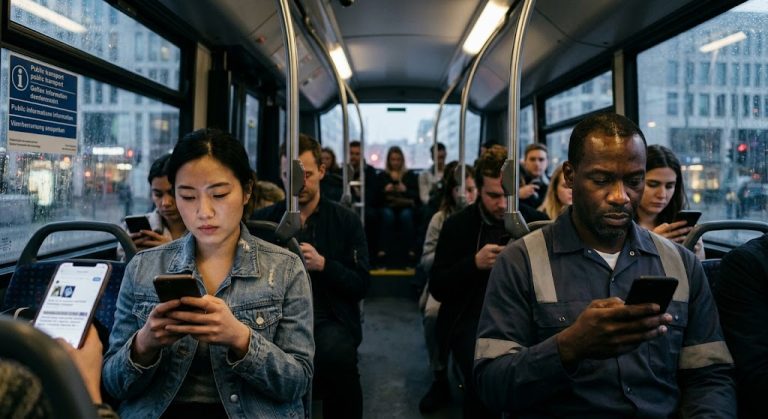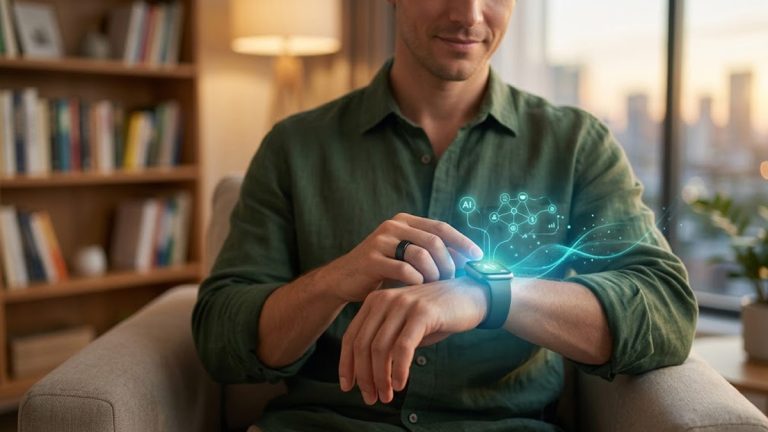









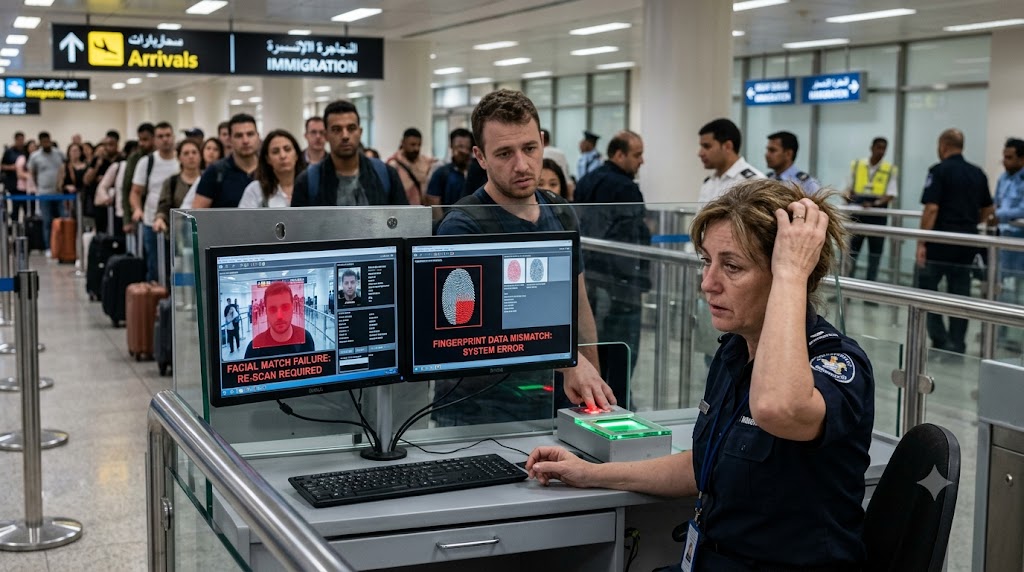
For more than a decade, the global technology sector pitched biometric authentication as the ultimate antidote to the frailties of human memory. Passwords were forgotten, recycled, and routinely stolen in massive database breaches. Multi-factor text messages were intercepted through SIM-swapping schemes. The solution, championed by smartphone manufacturers, financial institutions, and government agencies alike, appeared elegantly simple: turn the human body into the key.
By replacing alphanumeric strings with facial geometry and friction ridge patterns, digital identity became frictionless. Glancing at a smartphone screen unlocked bank accounts; pressing a thumb against an optical sensor cleared border control. The implicit security promise was that while a password could be guessed or intercepted, an individual’s physical anatomy was unique, unhackable, and permanently attached to its owner.
In 2026, that foundational assumption has fractured under the weight of advancing cyber threats, artificial intelligence, and structural architectural vulnerabilities.
Security researchers and enterprise defenders are increasingly warning of “biometric burnout”—a systemic crisis occurring as facial recognition and fingerprint scanning are stretched far beyond their technical limits. The fundamental flaw of biometric authentication is now glaringly apparent: unlike passwords or cryptographic keys, biological features cannot be rotated, reset, or revoked when compromised. As generative AI makes spoofing trivially accessible and ambient surveillance enables the remote harvesting of physical traits, relying solely on facial and fingerprint data has evolved from a modern convenience into a critical security risk.
The Revocation Paradox: Why Biological Data Cannot Be Reset
To understand the systemic danger of biometric over-reliance, one must examine the core architectural difference between a secret key and a physical trait.
Security architecture relies on the concept of revocability. If a password, token, or private cryptographic key is exposed in a data breach, the system invalidates the compromised credential and issues a new one. The breach is contained because the secret string is decoupled from the user’s permanent identity.
Biometrics invert this paradigm. Your face, your fingerprints, and your irises are not secrets; they are public-facing physical attributes. More importantly, they are non-revocable. If a central database storing high-resolution fingerprint scans or 3D facial mesh vectors is breached, those biological credentials are compromised indefinitely. A user cannot generate a new index finger or alter their orbital distance after a leak.
This limitation is exacerbated by how biometric data is stored and processed. While modern smartphones process facial geometry inside isolated hardware enclaves—such as Apple’s Secure Enclave or Android’s Trusted Execution Environments—many enterprise workforce management tools, commercial physical access systems, and government identity registries store raw or derived biometric mathematical templates in centralized cloud databases.
When those central repositories are breached, the compromised vectors can be used across multiple services. Unlike a leaked password that only affects a single account, a leaked biometric template compromises every system that relies on that specific biological marker for authentication.
Generative AI and the Demise of Traditional Liveness Detection
For years, biometric vendors assured the market that “liveness detection”—algorithms designed to verify that a physical face or finger belongs to a living, present human being—would prevent unauthorized access. Early presentation attacks, such as holding up a printed photograph or a high-definition video recording, were effectively mitigated by infrared depth sensors, structured light projectors, and micro-movement analysis.
Generative artificial intelligence has effectively neutralized these traditional defenses.
Modern deepfake architectures and generative diffusion models do not merely reproduce static images; they construct dynamic, real-time three-dimensional digital avatars capable of simulating subsurface light scattering, eye blinking, pulse-induced skin micro-color shifts (photoplethysmography), and natural micro-expressions.
In remote identity verification pipelines—such as opening a bank account online, authorizing high-value wire transfers, or accessing government benefit portals—attackers routinely deploy real-time AI injection tools. These tools bypass the smartphone’s physical camera entirely, feeding synthetic 3D video streams directly into the operating system’s video pipeline. To the liveness detection software, the synthetic face responds perfectly to prompts to turn left, smile, or blink, rendering visual facial verification increasingly unreliable.
Physical presentation attacks have similarly advanced. Using high-resolution 3D resin printers and conductive silicon compounds, threat actors can fabricate ultra-thin, flexible artificial finger sheaths derived from high-magnification photographs of fingerprints. These silicon overlays reproduce micro-dermal ridges, electrical conductivity, and moisture levels, allowing unauthorized users to trick capacitive and optical fingerprint scanners embedded in laptops and mobile hardware.
Ambient Harvesting: The Loss of Physical Secrecy
The secondary vulnerability of biometrics is that human beings continuously broadcast their physical traits throughout the physical world.
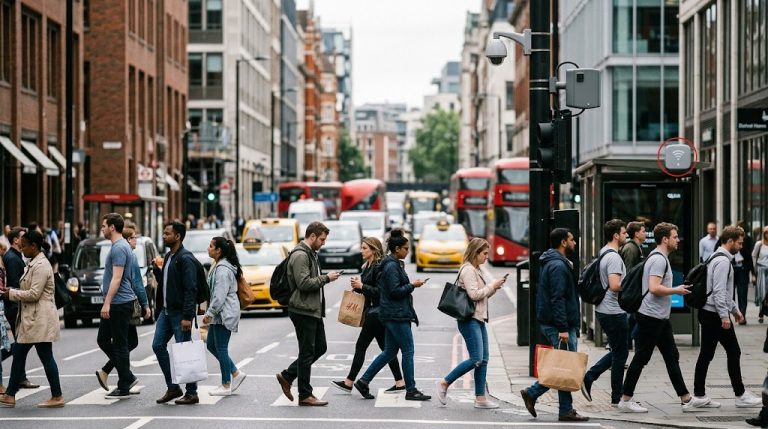
Unlike a password kept securely inside a password manager, fingerprints are deposited on every glass surface, smartphone screen, door handle, and coffee cup a person touches. Facial features are continuously captured by high-resolution public CCTV networks, commercial security cameras, and casual photographs uploaded to social media platforms.
This reality has enabled “ambient harvesting”—the remote, non-consensual collection of biometric credentials from a distance:
- High-Resolution Photogrammetry: Modern camera sensors and telephoto optics can capture sufficient ridge detail from a photograph taken several meters away to reconstruct a functional fingerprint template. Prominent security researchers have successfully cloned fingerprints from public press conference photographs where subjects held up their hands.
- Scraped Facial Databases: Mass facial scraping platforms have indexed billions of public images from the web, constructing searchable facial recognition databases. Attackers can cross-reference an anonymous photograph against these registries to instantly extract an individual’s identity, full name, and associated digital profiles.
- Contactless Latent Lifting: Advanced forensic imaging tools allow bad actors to scan and lift high-resolution latent fingerprints from physical objects in public spaces within seconds using portable infrared devices, turning everyday physical contact into a credential leak.
Because biological features are exposed by default, treating a face or a fingerprint as a confidential credential violates the basic cryptographic principle that authentication must rely on information that remains secret.
Sensor Degradation and the Fallback Vulnerability
Beyond external security threats, single-factor biometric systems suffer from operational fragility that forces dangerous architectural compromises.
Human biology is dynamic, not static. Fingerprints are temporarily or permanently altered by physical labor, skin conditions like eczema, minor injuries, scar tissue, or age-related loss of skin elasticity. Facial recognition performance degrades under varying lighting conditions, severe facial swelling, medical dressings, extreme fatigue, or heavy environmental obstruction.
When a biometric scanner encounters a valid user whose physical traits have temporarily shifted, the system experiences a False Rejection. If the False Rejection Rate (FRR) is set too strictly, legitimate users are repeatedly locked out of critical devices or facilities, creating severe operational friction and user frustration.
To prevent customer service bottlenecks and employee lockouts, system designers are forced to implement fallback mechanisms.
In almost every consumer device and enterprise terminal, when a facial scan or fingerprint fails three consecutive times, the software reverts to a secondary authentication method—typically a four-digit or six-digit numerical PIN.
This fallback loop creates a dangerous security paradox. An enterprise may invest millions of dollars deploying cutting-edge biometric scanners, but the overall security posture of the system is immediately downgraded to the strength of the fallback code. Attackers aware of this dynamic do not bother cracking the complex biometric algorithm; they intentionally trigger biometric failure modes—for example, by placing a piece of clear tape over a scanner—to force the system into accepting a easily guessable PIN.
The Legal and Compliance Fallout
As the security vulnerabilities of biometrics become clearer, regulatory bodies are increasing the legal liabilities associated with harvesting and storing biological data.
Frameworks such as the European Union’s General Data Protection Regulation (GDPR), the Illinois Biometric Information Privacy Act (BIPA), and emerging state-level data privacy laws across the United States treat biometric information as a specialized, high-risk data category. Unlike standard personal data, unauthorized collection, storage, or processing of biometric identifiers carries severe statutory penalties and mandatory class-action liability.
Organizations that mandate facial or fingerprint scans for employee timekeeping, physical access, or customer authentication face significant legal exposure:
- Coercive Consent Challenges: Regulators are increasingly scrutinizing whether employee consent for biometric scanning can be considered “freely given” when employment or system access is conditioned on surrendering biological data.
- Data Minimization Mandates: Compliance frameworks strictly require organizations to prove that biometric collection is necessary and that less invasive alternatives cannot achieve the same operational outcome.
- Cross-Border Transfer Restrictions: Transferring biometric databases across international borders has become a legal minefield, as privacy laws in jurisdictions like the EU forbid exporting biometric templates to countries lacking equivalent legal protections.
As compliance costs soar and litigation risks multiply, the financial justification for maintaining centralized biometric databases is rapidly eroding.
The Zero-Trust Alternative: Biometrics as a Local Gate, Not a Shared Key
The solution to biometric burnout is not the total abandonment of facial and fingerprint recognition, but a fundamental realignment of how biological data is used within a security architecture.
Security engineers are shifting toward a Zero-Trust identity framework where biometrics are never used as a stand-alone credential, never transmitted across networks, and never stored in central databases. Instead, biometrics are relegated to a single, isolated role: a local, on-device unlock mechanism for hardware-bound cryptographic keys.
This paradigm is embodied in modern open standards such as FIDO2 and W3C WebAuthentication (WebAuthn), commonly known as Passkeys:
- Hardware Isolation: The user’s biometric data never leaves the local device’s secure hardware enclave. It is never sent to the website, the application developer, or a cloud server.
- Local Decryption Only: The biometric scan acts strictly as a physical switch that releases a unique, origin-bound private cryptographic key stored inside the device’s hardware chip.
- Cryptographic Proof: The device uses that private key to sign a randomized challenge sent by the remote server. The server verifies the signature using a public key, confirming the user’s identity mathematically.
+--------------------------------------------------------------------------+
|                  PASSKEY VS. RAW BIOMETRIC ARCHITECTURE                  |
|                                                                          |
|  Legacy Centralized Biometrics:                                          |
|  User Face/Finger ---> Transmitted over Network ---> Stored in Cloud DB  |
|                        [Vulnerable to Interception & Database Leaks]     |
|                                                                          |
|  FIDO2 / Passkey Architecture:                                           |
|  User Face/Finger ---> Unlocks Local Secure Chip ---> Signs Crypto Key   |
|                        [Zero Network Transmission / Zero Cloud Storage]  |
+--------------------------------------------------------------------------+
Under this architecture, even if an attacker intercepts the network traffic or breaches the remote server, they gain access to nothing of value. There are no stored biometric templates to steal, and the public key stored on the server cannot be used to impersonate the user elsewhere.
Furthermore, forward-looking security frameworks are integrating Behavioral Biometrics alongside hardware tokens. Rather than taking a single static measurement of a face or finger at a single point in time, behavioral systems continuously evaluate passive interaction metrics—such as typing cadence, touchscreen pressure, device tilt angles, and navigation trajectories. If a device is stolen while unlocked, the behavioral model detects the sudden shift in physical interaction and instantly locks system access, providing continuous protection without requiring repetitive manual scans.
Re-Engineering the Identity Stack
The era of treating the human body as an unhackable password has reached its natural conclusion. While facial recognition and fingerprint scanning transformed the user experience by eliminating daily typing friction, their elevation to single-factor identity arbiters was a structural miscalculation.
Biological traits were never meant to serve as secrets. They are persistent, public, and permanently exposed. As generative artificial intelligence renders visual and physical spoofing trivial, relying on facial and fingerprint data as an exclusive security layer invites catastrophic, unfixable identity compromise.
The path forward requires a return to defense-in-depth security principles. Biometrics must be demoted from shared keys to local hardware switches, integrated into multi-factor ecosystems alongside cryptographic tokens, behavioral telemetry, and contextual risk analysis. The future of digital identity relies not on searching the human body for an unhackable key, but on building resilient cryptographic architectures that protect human privacy while keeping bad actors at bay.