For years, discovering a new song often meant listening to the radio, browsing music charts, asking friends for recommendations, or stumbling across an artist on a streaming platform.
That habit is changing.
Today, a few seconds of a song appearing in a short-form video can be enough to send listeners searching for the full track. A catchy chorus, an unexpected beat, or even a nostalgic clip can turn an unfamiliar song into the soundtrack of millions of videos almost overnight.
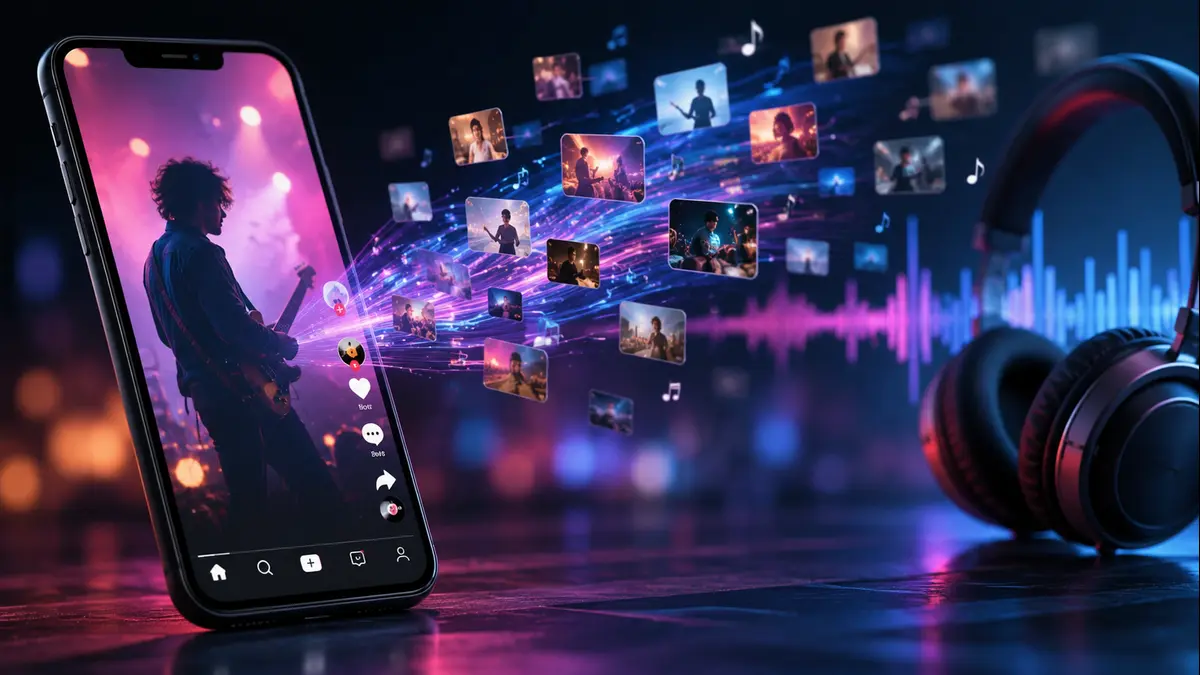
Short-form video has become more than a place to watch quick entertainment. It is increasingly becoming one of the ways people find, remember, and share music.
A Song No Longer Needs to Start With a Full Listen
One of the biggest changes is how people encounter music for the first time. Instead of deliberately searching for a new artist, users may hear a song while watching a comedy clip, travel video, gaming moment, fashion post, or personal story.
The music arrives first. The artist comes later.
That difference is important because the listener may already have an emotional connection to a song before knowing who created it. A memorable 15- or 30-second section can become the part people recognize, even when they have never heard the entire track.
The Most Memorable Moment Can Become the Most Important One
Traditional music discovery often encouraged listeners to experience a song from beginning to end.
Short-form video works differently.
Creators typically select the section that best fits their story or captures attention quickly. Sometimes that means the chorus. Sometimes it is a beat drop, a lyric, an unusual vocal moment, or an instrumental section.
As more creators use the same audio, that particular moment can become strongly associated with the song. Eventually, people may search for the track because they recognize the sound from somewhere else. The discovery process becomes almost circular:
Video → recognizable sound → search → full song → artist discovery.
Old Songs Can Suddenly Feel New Again
Short-form video has also created an unusual opportunity for older music. A song released years or even decades ago can suddenly find a new audience when a particular section becomes popular in online videos.
For younger listeners, the song may not feel like a revival at all. It can feel like a brand-new discovery.
That phenomenon has helped introduce older music to audiences who may never have encountered it through traditional radio or music charts. Nostalgia plays a role, but so does context. A song can acquire a completely different meaning when it is paired with a new trend, meme, visual style, or cultural moment.
Artists Are Paying Attention
The relationship between musicians and short-form video has become increasingly important. For emerging artists, a song gaining attention through user-generated videos can provide exposure that would otherwise be difficult to achieve.
Instead of relying exclusively on traditional promotional campaigns, artists can participate directly in the culture surrounding their music. Some musicians create their own short videos. Others interact with creators using their songs. In many cases, the audience itself becomes part of the promotional engine. That creates a very different model from traditional music marketing. The audience isn’t simply consuming the campaign.
The audience can become the campaign.
Why Short Clips Can Create Huge Curiosity
There is another psychological element behind the phenomenon: curiosity. Hearing only a small portion of a song can leave listeners wanting more.
What happens next?
Who is singing?
What is the name of the song?
Is the full track as good as the clip?
Those questions can encourage people to search for the music themselves. This is particularly powerful when the audio is attached to a visually memorable moment. The listener does not necessarily remember the lyrics, but they remember the feeling and the scene in which they heard it.
That emotional association can make the song easier to recall later.
Music Discovery Is Becoming More Visual
For decades, music was primarily an audio experience. Short-form platforms have blurred that boundary. A song can now become popular because of the combination of sound, visual storytelling, editing, humor, personality, and timing.
The same track might mean something completely different depending on the video using it.
A dramatic song could appear in a travel montage. A nostalgic track could become part of a childhood memory trend. An energetic beat might accompany sports highlights or gaming clips. The music is no longer operating by itself. It becomes part of a larger piece of content.
Streaming Platforms Still Matter
Short-form video has not replaced traditional music platforms. Instead, the two ecosystems increasingly work together. A listener may discover a song through a short video and then move to a streaming service to hear the complete version, save it, follow the artist, or explore related tracks. That creates a discovery funnel that can look very different from the old model:
Short-form video → music search → streaming platform → artist profile → playlist → repeat listening.
In other words, a short clip may be only the first step in a much longer relationship between an artist and a listener.
The Challenge for Musicians
There is, however, a downside to designing music around short-form attention. When a particular section of a song becomes the main focus, listeners may associate the entire track with only a few seconds. That can create pressure for musicians to produce immediately recognizable moments. But a great song does not necessarily have to become a viral sound.
Artists still need to build something that can survive beyond the trend. A viral clip may generate attention, but sustained interest usually depends on the music itself, the artist’s identity, and the relationship they build with their audience.
What Happens Next?
The biggest change may not be the popularity of short-form video itself. It is the way the format has changed the starting point of music discovery. People do not always go looking for music anymore. Sometimes music finds them while they are doing something completely unrelated.
That creates an environment where an unknown artist can suddenly become familiar, an old song can return to the cultural conversation, and a few seconds of audio can send thousands or millions of people looking for the full story. For listeners, discovering music has become more spontaneous.
For artists, it has become more unpredictable. And for the music industry, the question is no longer simply what song will people listen to? It is increasingly:
What song will make people stop scrolling?