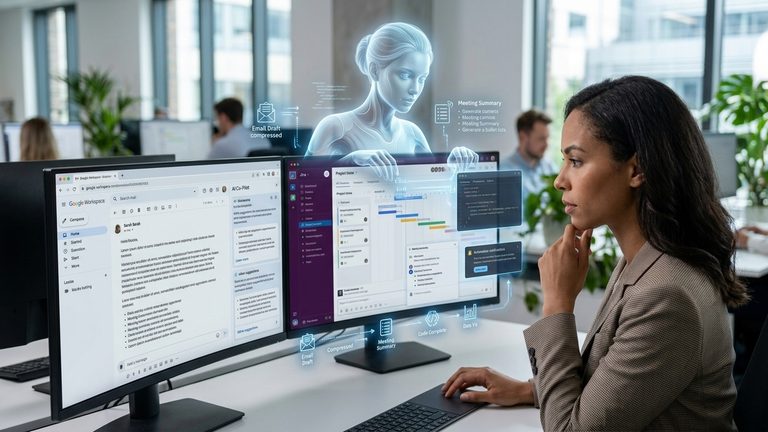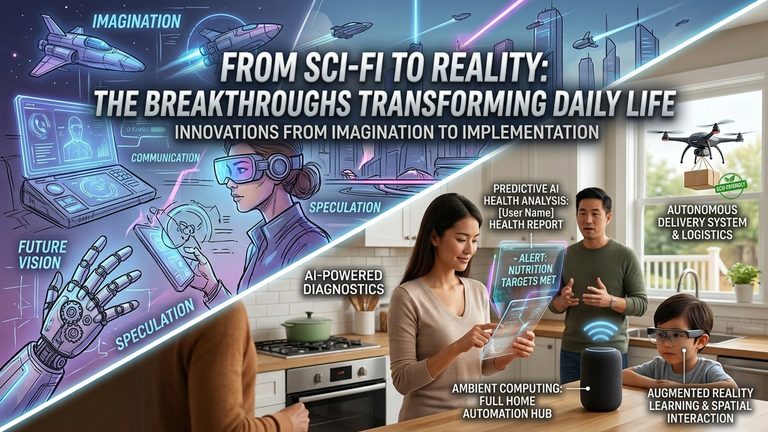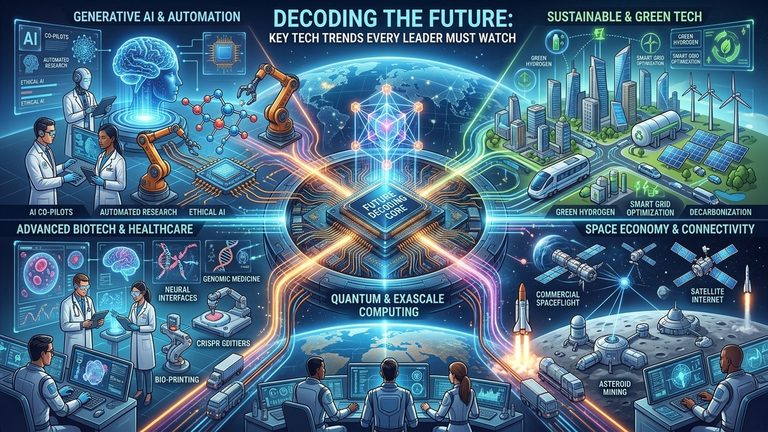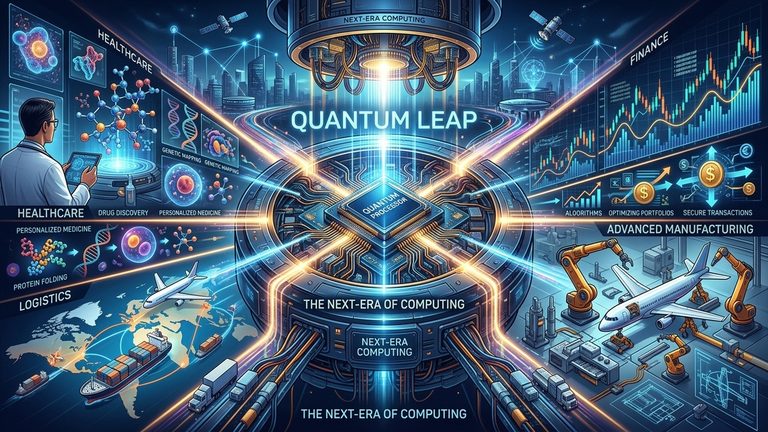
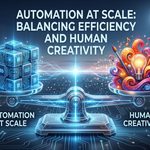





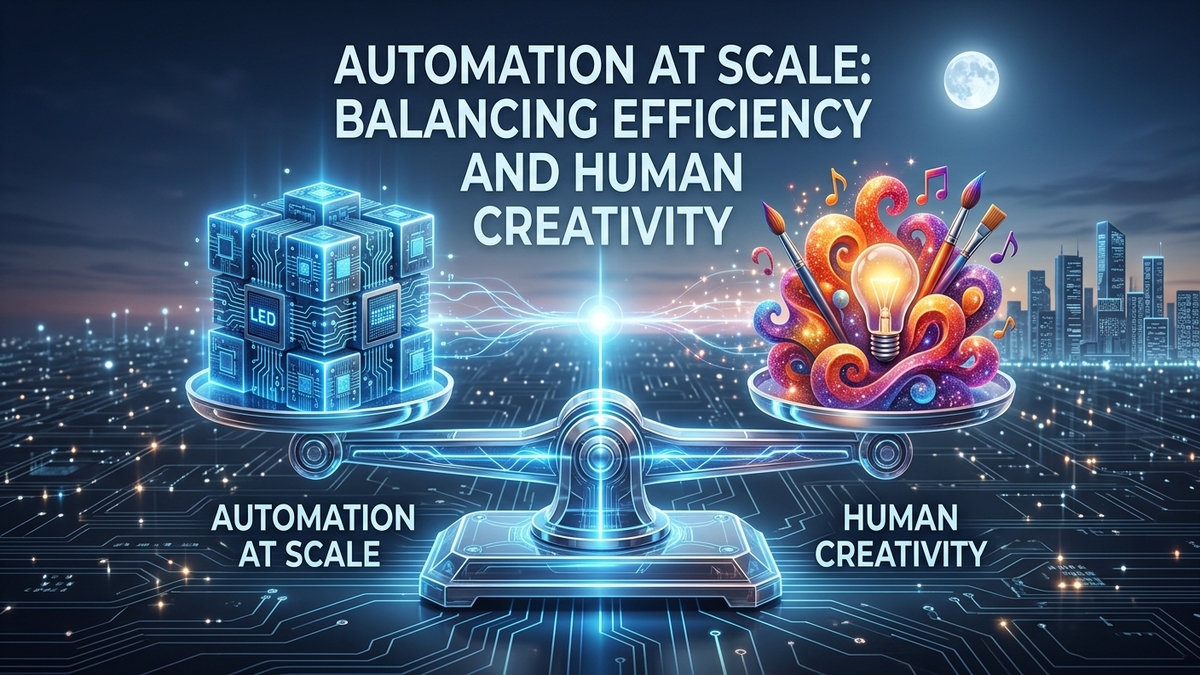
Across global corporate boardrooms, manufacturing plants, and digital newsrooms, the defining imperative of the modern economy has shifted. The early era of digital transformation—characterized by localized software automation, experimental pilots, and isolated efficiency gains—has given way to hyper-automation at scale. Powered by advanced machine learning, autonomous software agents, and physical robotics, enterprises can now execute complex cognitive and operational processes with unprecedented speed and minimal friction.
Yet as algorithms take over everything from software code generation and inventory forecasting to marketing campaign optimization and preliminary legal discovery, a profound structural tension has emerged. The relentless pursuit of scale and cost reduction often collides directly with the human qualities that drive long-term value: original thought, emotional intelligence, strategic intuition, and creative storytelling.
Organizations that attempt to strip human oversight out of the operational equation increasingly discover the limits of pure optimization. When every enterprise leverages similar algorithmic tools to maximize short-term throughput, products, services, and corporate communications risk collapsing into a sea of featureless homogenization. The central leadership challenge of the current decade is therefore not simply deciding what can be automated, but establishing a sustainable balance between algorithmic efficiency and human ingenuity.
The Scale Engine: When Optimization Meets Homogenization
The economic rationale for scaling automation is compelling. According to global workforce analyses, enterprise adoption of artificial intelligence and automated workflows has delivered significant gains in labor productivity, with top-tier technology adopters outperforming their peers in operational efficiency and margin growth. By delegating repetitive data processing, routine administrative coordination, and preliminary content drafting to intelligent systems, organizations unlock thousands of hours of capacity.
However, the hyper-optimization of enterprise workflows introduces a subtle yet costly side effect: creative commoditization.
When algorithmic platforms generate marketing campaigns based purely on historical audience data, the resulting content often feels derivative, lacking the emotional resonance and cultural nuance required to build authentic brand loyalty. In product design and software development, automated systems excel at recombining existing ideas to solve immediate, well-defined problems, but struggle to conceive the non-linear, paradigm-shifting breakthroughs that create entirely new markets.
This dynamic creates a strategic paradox. Automation optimizes how fast an organization executes, but human creativity defines whether what is executed actually matters. Without human direction, scale accelerates repetition rather than innovation. Companies that over-rely on automated pipelines risk losing their brand identity, degrading customer trust, and rendering their offerings indistinguishable from competitors using the exact same technological frameworks.
The Structural Realignment of the Workforce
The rapid integration of automation at scale is fundamentally altering the global labor market, reshaping job roles and forcing a re-evaluation of core competencies.Rather than leading to immediate, widespread job elimination across all sectors, the primary impact of enterprise automation has been the rapid transformation of task composition within professional occupations.
Recent workforce data from leading international research institutions indicates a two-track evolution in modern employment:
- Professionalized Roles:Positions that integrate automated tools while placing a high premium on human judgment, leadership, ethical reasoning, and strategic oversight are expanding rapidly.These roles command higher wages as employers recognize that workers empowered by intelligent systems can deliver value at an unprecedented scale.
- Routine Operational Roles: Jobs focused predominantly on manual data processing, basic administrative compilation, or rule-based execution are shrinking or undergoing aggressive restructuring as automated agents absorb routine workloads.
Crucially, as software platforms absorb routine mechanics, the skill requirements for remaining positions are evolving twice as fast as historical baselines. Employers are prioritizing capabilities that machines cannot replicate: empathy, contextual understanding, complex problem-solving, and original creative direction.
This structural shift presents a significant management hurdle: the disruption of traditional early-career development. Historically, junior staff developed deep domain expertise, institutional knowledge, and strategic judgment by performing routine analytical and administrative tasks. As automation absorbs these entry-level responsibilities, organizations must deliberately redesign training pathways, mentorship models, and onboarding programs to ensure the next generation of leaders acquires the high-level critical thinking skills required to manage automated enterprises.
Redefining Human Value: Task Execution vs. Creative Direction
Achieving operational harmony between automated systems and human talent requires a clear, functional division of labor. Successful enterprises operate on a fundamental distinction: automation excels at scale, speed, pattern recognition, and execution; human intelligence excels at purpose, narrative, ethics, and strategic direction.
This dynamic is reshaping core functional areas across global industries:
Software Engineering and System Architecture
In modern software development, agentic tools and automated code generators routinely assemble boilerplate code, execute automated testing suites, and identify security vulnerabilities in real time. However, defining system architecture, evaluating edge-case user experiences, enforcing ethical data privacy standards, and designing resilient solutions for unstructured business problems remain strictly human domains. Engineers are evolving from manual line-by-line coders into system architects and auditors who guide autonomous software agents.
Marketing, Media, and Corporate Storytelling
In digital marketing and corporate communications, automated analytics engines process vast streams of consumer behavior data to personalize distribution, optimize ad placements, and generate baseline asset variations. Yet human creative directors retain exclusive control over brand narrative, emotional depth, and cultural positioning. Organizations using hybrid models—where machines generate analytical insights while human storytellers craft the core message—report significantly higher engagement and brand recall than those relying on fully automated content pipelines.
Product Innovation and Research & Development
In industrial design, pharmaceuticals, and materials science, automated simulation models rapidly screen millions of molecular configurations or mechanical iterations, bypassing months of wet-lab testing. But defining which societal problems are worth solving, interpreting unexpected experimental anomalies, and making qualitative judgments about product aesthetics and human usability require human intuition and interdisciplinary knowledge.
By positioning automated systems as powerful execution partners rather than decision-makers, organizations amplify the leverage of their creative personnel. Human workers are freed from the mechanical drudgery of task execution, allowing them to focus their energy on ideation, strategy, and high-impact problem solving.
Governance and Strategic Frameworks for the Hybrid Enterprise
To prevent automation at scale from eroding organizational agility and creative quality, corporate leaders must implement rigorous governance frameworks that preserve human agency. Balancing efficiency and creativity cannot be treated as an abstract ideal; it must be embedded directly into operational protocols.
Forward-thinking organizations rely on several key structural principles to maintain this equilibrium:
- Automate Execution, Preserve Strategy: Routine, rule-based processes—such as transaction logging, report scheduling, data hygiene, and basic asset formatting—should be automated aggressively. Conversely, strategic direction, brand voice definitions, ethical assessments, and core policy decisions must remain strictly under human control.
- Establish Human-in-the-Loop Safeguards: For customer-facing assets, financial deployments, or operational changes that exceed defined risk thresholds, human sign-off must be mandatory. Automated platforms should present recommendations, options, and data drafts, leaving human experts to evaluate context, verify factual accuracy, and make the final determination.
- Audit for Authenticity and Drift: Automated output must be continuously monitored for quality decay, algorithmic bias, and stylistic monotony. Regular creative audits ensure that automated processes remain aligned with corporate values, brand integrity, and evolving market expectations.
- Redefine Performance Metrics: Measuring organizational performance solely by throughput volume or cost reduction encourages over-automation. Leading enterprises evaluate collaboration quality, tracking how effectively automated tools expand human creative capacity, improve employee job satisfaction, and drive long-term customer engagement.
Beyond Lights-Out Operations: The Industry 5.0 Vision
For decades, the ultimate industrial ambition was the “lights-out” factory or fully automated enterprise—a system operating entirely without human intervention. Today, the limitations of that cold efficiency model have become clear. Fully automated operations can optimize existing processes within rigid parameters, but they are uniquely fragile when confronted with unexpected economic shocks, cultural shifts, or complex ethical dilemmas.
This realization has catalyzed the transition toward Industry 5.0—a manufacturing and operational philosophy that explicitly restores human creativity, adaptability, and environmental stewardship to the center of industrial technology.
Industry 5.0 views technology not as a mechanism to eliminate human labor, but as an advanced toolset designed to elevate human potential. Machines provide precision, speed, physical safety, and data processing at scale; human workers contribute intuition, moral reasoning, artistic expression, and contextual adaptability.Together, this hybrid model produces outcomes that neither purely manual labor nor fully automated systems could ever achieve alone.
The global market over the coming decade will not belong to the organizations that automate the most tasks or cut the most personnel. Instead, long-term market leadership will be captured by enterprises that master the delicate synthesis of scale and soul—harnessing the speed of automated systems to liberate, elevate, and multiply distinctly human creativity.