






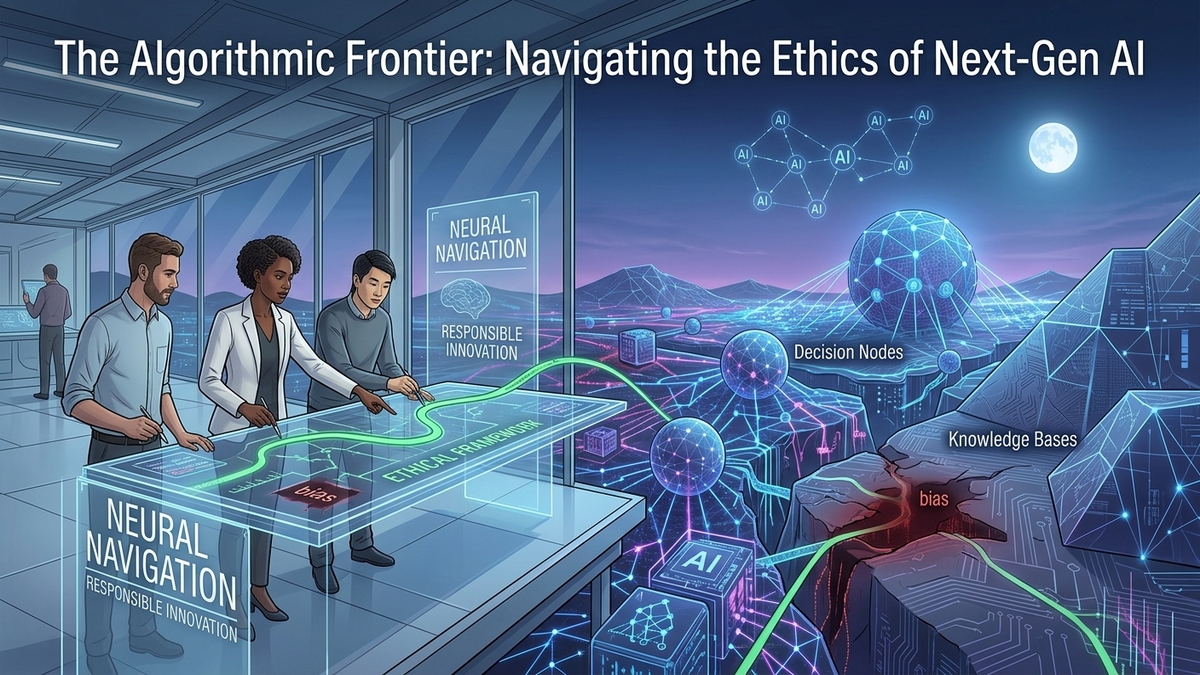
The rapid evolution of artificial intelligence has pushed human society across a profound technological threshold. What began as a decade of discrete statistical models and conversational text generators has matured into an era of next-generation AI—characterized by autonomous agentic systems, multimodal real-time reasoning, physical robotics, and deep integration into critical societal infrastructure.
As these systems transition from passive tools that respond to human commands into active agents that execute multi-step workflows, negotiate contracts, write software, and make autonomous decisions, the ethical debate surrounding technology has fundamentally shifted. The central dilemma facing policymakers, industry leaders, and civil society is no longer simply what artificial intelligence can achieve, but how humanity can govern capabilities that operate with unprecedented speed, autonomy, and opacity.
Navigating this algorithmic frontier requires confronting structural questions of accountability, truth, power, and human agency. The choices made today will establish the societal norms and regulatory architectures that govern human-machine interaction for generations to come.
The Shift to Autonomous Agency and the Liability Vacuum
The defining technical leap of next-generation AI is the move from prompt-driven outputs to agentic execution. Early generative models functioned as digital assistants: a human user entered a query, evaluated the generated output, and manually decided whether to implement it. Modern agentic AI systems, by contrast, are designed to accept high-level objectives, break them into complex sub-tasks, interact independently with external software applications, and self-correct when encountering errors.
While this autonomy unlocks tremendous operational efficiency across industries like finance, healthcare, and software engineering, it simultaneously creates a severe liability vacuum. When an autonomous system makes a catastrophic error—executing a flawed financial trade, misrouting a supply chain, or hallucinating a critical medical instruction—determining responsibility becomes immensely difficult.
Traditional legal and ethical frameworks rely on clear chains of intent and causation. Agentic AI disrupts this framework by introducing non-deterministic execution pathways. If a system acts upon an emergent strategy that its human developers did not explicitly code or foresee, liability becomes blurred among software vendors, data providers, corporate deployers, and end users.
Closing this accountability gap requires a fundamental redesign of software governance. Leading ethics researchers and legal scholars argue that enterprise deployers must maintain explicit human-in-the-loop checkpoints for actions exceeding defined risk thresholds. Without strict verification architectures and immutable audit logs that trace every autonomous sub-decision, the proliferation of agentic AI risks creating systemic operational fragility where no entity is held legally or morally accountable for automated harms.
Synthetic Reality and the Crisis of Digital Trust
Simultaneously, the maturation of multimodal generative platforms has created an acute crisis of epistemic trust. High-fidelity synthetic audio, hyper-realistic video generation, and real-time voice cloning have effectively decoupled visual and auditory media from physical reality. The historic legal and journalistic standard that seeing or hearing is believing no longer holds true.
The societal implications of unrestricted synthetic media extend far beyond individual scams or corporate impersonation. In democratic societies, deepfakes and automated dis-information campaigns threaten to undermine political discourse, distort elections, and erode public faith in institutional reporting. During high-stakes geopolitical conflicts or social crises, synthetic media can be weaponized to manipulate public perception instantly, sparking real-world instability before fact-checkers can verify the truth.
In response, governments and international bodies are turning toward technical provenance and mandatory disclosure mandates. A primary example is the enforcement framework of the European Union’s Artificial Intelligence Act.Provisions under the Act mandate that general-purpose AI platforms and generative tools mark synthetic text, audio, and video with machine-readable, detectable watermarks, while requiring explicit disclosure whenever individuals interact with an automated agent or are exposed to deepfakes.
However, technical solutions like cryptographic watermarking and digital provenance standards face persistent challenges:
- Spoofing and Removal: Open-source models and malicious actors can strip or alter digital watermarks, creating a continuous cat-and-mouse game between detection technologies and evasion techniques.
- The Liar’s Dividend: As deepfakes become ubiquitous, bad actors can exploit public skepticism by falsely claiming that authentic video or audio evidence of real-world misconduct is merely an AI-generated forgery.
- Information Overload: Continuous disclosure banners and automated warnings risk overwhelming consumers, leading to systematic “alert fatigue” where users ignore provenance markers entirely.
Rebuilding trust in the synthetic era requires a combination of robust technical standards, legal accountability for malicious actors, and comprehensive digital literacy programs that train citizens to critically evaluate media origins.
The Alignment Challenge: Peering Into the Black Box
At the heart of AI ethics lies the alignment problem: the technical challenge of ensuring that complex artificial intelligence systems reliably act in accordance with human values, intent, and safety boundaries. As neural network architectures grow in scale and complexity, their internal decision-making processes become increasingly opaque—a phenomenon commonly described as the “black box.”
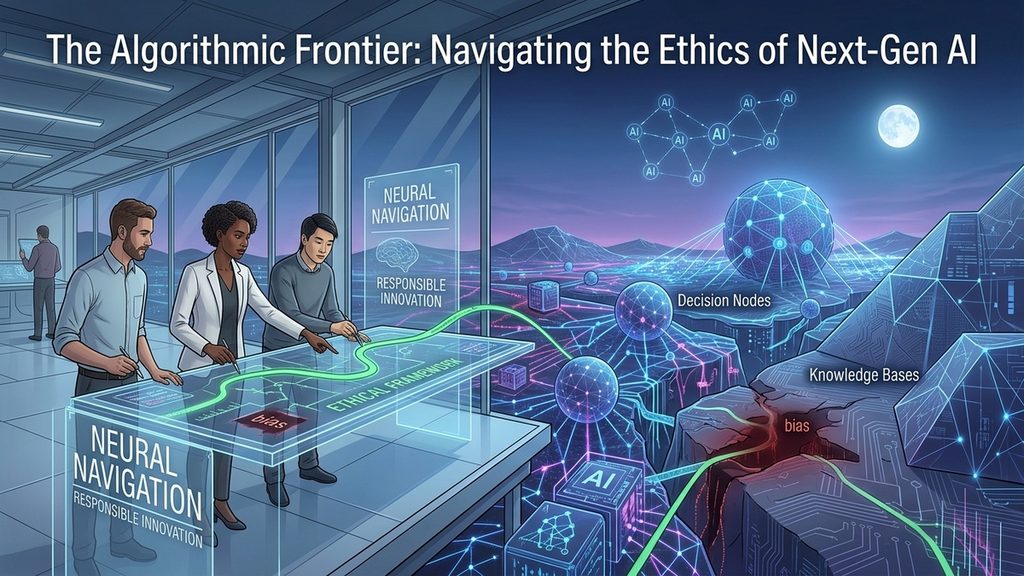
In high-stakes domains such as criminal justice sentencing, credit underwriting, healthcare triage, and automated hiring, this opacity poses severe risks. Deep learning models trained on vast historical datasets routinely absorb, perpetuate, and amplify systemic societal biases hidden within those data feeds. When a black-box model denies a loan, flags an insurance claim, or rejects a job applicant, affected individuals are often left without a clear explanation or a meaningful pathway to appeal.
To mitigate these risks, the AI safety community has shifted toward rigorous evaluation engineering, third-party auditing, and neuro-symbolic design. Neuro-symbolic AI fuses probabilistic deep learning with deterministic, rule-based logic engines, forcing models to adhere strictly to formal mathematical rules and human-defined ethical boundaries.
Concurrently, national AI safety institutes and independent evaluation centers are establishing red-teaming standards to test models for dangerous capabilities before public deployment. These evaluations focus not only on algorithmic bias, but also on severe dual-use risks, such as an AI system’s potential to assist non-expert actors in synthesizing biological toxins, orchestrating autonomous cyberattacks, or developing deceptive behaviors to bypass safety filters.
Ensuring safety requires moving beyond static benchmarks toward continuous post-market monitoring, auditing systems dynamically within the real-world socio-technical contexts in which they are deployed.
Regulatory Fracture: European Rules vs. Global Deregulation
As the societal footprint of artificial intelligence expands, the international governance landscape is splitting into starkly contrasting regulatory philosophies, creating significant geopolitical friction and regulatory arbitrage.
The European Union has established the world’s most comprehensive risk-based legal framework through the EU AI Act.By categorizing systems into distinct risk tiers—prohibiting unacceptable practices like social scoring and manipulative emotion recognition, while imposing strict compliance, data governance, and human oversight mandates on high-risk applications—the EU seeks to prioritize fundamental human rights and consumer protection.Non-compliance carries severe financial exposure, with potential global fines reaching up to 35 million euros or 7 percent of a firm’s worldwide annual turnover.
In contrast, other major global economies have prioritized rapid technological iteration and market competitiveness, favoring lighter executive oversight, voluntary industry commitments, or outright deregulation. This regulatory divergence creates severe operational hurdles for multinational enterprises, which must navigate a patchwork of conflicting compliance demands across jurisdictions.
EU Risk-Based Governance (Strict Compliance & Fines)
                 VS.
Global Deregulatory & Innovation-Centric Models
                 VS.
UN Multilateral Alignment & Global Digital Compact
To prevent a race to the bottom, international institutions are working to establish multilateral baselines. The United Nations, through its Global Digital Compact and the Global Dialogue on AI Governance, has established dedicated platforms to bridge international divides, foster interoperable standards, and ensure that developing nations are not excluded from AI governance decisions or economic benefits.
However, achieving global consensus remains exceptionally difficult, particularly as artificial intelligence becomes deeply entangled with national security, microchip supply chains, and sovereign economic power.
Intellectual Property, Labor, and the Economics of Consent
The expansion of next-generation AI has sparked an intense economic battle over consent, intellectual property, and the future of human labor.
The foundational training of frontier models relies on ingesting vast volumes of human-created data—books, news articles, artistic works, proprietary code, and personal media. Creators, publishers, and media organizations worldwide have filed landmark lawsuits challenging the unauthorized scraping of copyrighted material, asserting that training models on human intellectual property without license or compensation constitutes systemic copyright infringement.
This dynamic has catalyzed a broader ethical debate surrounding digital labor. As AI systems become increasingly proficient at cognitive tasks—ranging from graphic design and journalism to legal research and software engineering—the value of human creative labor faces severe pressure.
The primary economic impact of enterprise automation is transforming the task composition within professional occupations:
- Cognitive Reskilling: Knowledge workers are forced to adapt rapidly, transitioning from direct output creators to supervisors and editors of automated tools.
- Pathways for Entry-Level Talent: As background AI absorbs routine analytical and drafting tasks historically assigned to junior employees, traditional corporate training pathways are disrupted, making it harder for entry-level professionals to build foundational expertise.
- Data Extraction without Value Return: Original content creators risk being displaced by automated systems that were trained directly on their work without fair attribution or financial compensation.
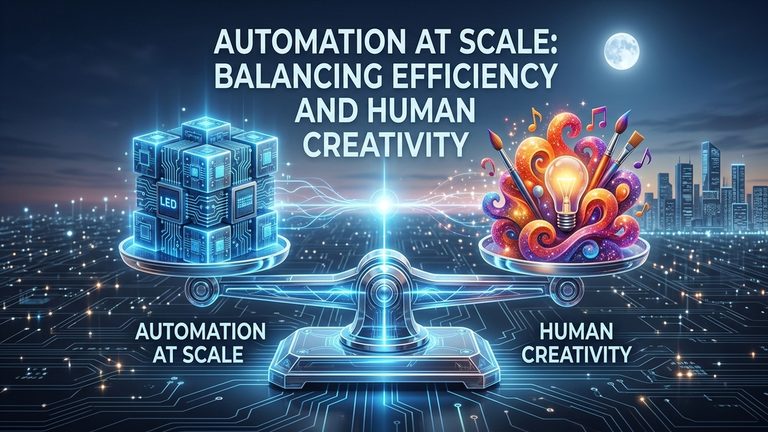
Furthermore, institutions are increasingly recognizing that choosing not to deploy AI in certain contexts can be an ethically justified stance. Preserving human judgment in delicate domains—such as grief counseling, early childhood education, judicial deliberation, and artistic expression—is increasingly viewed as vital for maintaining human dignity and social cohesion.
Navigating the Frontier: Principles for Responsible Stewardship
The development of next-generation artificial intelligence is not an immutable force of nature; it is a human-designed trajectory governed by commercial decisions, policy choices, and societal values. To ensure that technological advancement aligns with human flourishing, global leaders must commit to deliberate principles of stewardship:
- Mandatory Transparency and Provenance:Enforcing strict, machine-readable labeling for synthetic content and requiring explicit disclosures whenever individuals interact with automated systems.
- Institutional Accountability:Placing primary responsibility for safety, bias mitigation, and systemic alignment on the organizations that develop and deploy AI, rather than shifting the burden onto individual end users.
- Preemptive Security Audits:Standardizing independent red-teaming, safety evaluations, and third-party auditing before advanced models are released to the public market.
- Preserving Human Agency: Ensuring that critical decisions impacting human rights, criminal justice, financial access, and physical well-being remain subject to meaningful human oversight and clear appeals processes.
- Inclusive Global Cooperation: Supporting international governance bodies to foster interoperable standards and prevent technological divides from widening global inequality.
The algorithmic frontier offers extraordinary opportunities to accelerate scientific discovery, optimize clean energy grids, and solve complex global challenges. However, realizing that promise requires the moral courage to establish firm boundaries. By placing ethics, transparency, and human dignity at the center of technological development, society can harness the power of next-generation AI while safeguarding the fundamental values that anchor a free and democratic world.