







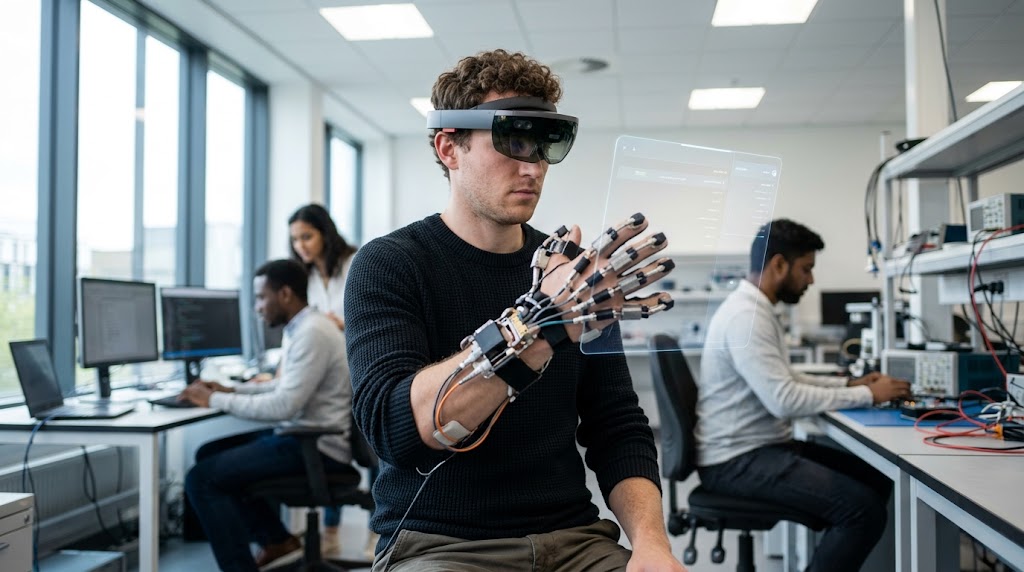
For nearly two decades, the primary portal to the digital universe has been a flat, featureless sheet of glass. From smartphones and tablets to automotive consoles and industrial terminals, the capacitive touchscreen unified input and output into a single visual surface. Yet for all its efficiency, the glass panel created a profoundly unnatural sensory trade-off: it reduced the rich, multidimensional human sense of touch to an abstract ritual of tapping, swiping, and pinching smooth, unyielding surfaces.
Human beings navigate the physical world through embodied perception. When we grip a surgical tool, turn a brass door handle, feel the grain of untreated wood, or gauge the resistance of a mechanical dial, our nervous system receives a continuous stream of tactile and kinesthetic data. The touchscreen stripped this feedback away, forcing the eyes to perform double duty—monitoring both what the user is doing and how the machine responds.
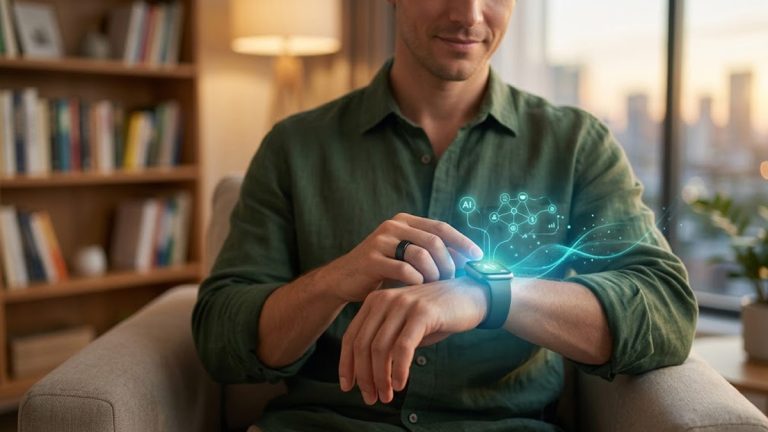
That visual monopoly is now breaking down. Driven by advances in spatial computing, ambient artificial intelligence, tele-robotics, and micro-materials, human-computer interaction (HCI) is undergoing its most fundamental shift since the invention of the graphical user interface. A new generation of haptic wearables—ranging from high-definition sensory rings and wristbands to micro-fluidic gloves and skin-integrated tactile patches—is restoring physical texture, weight, and force feedback to the digital realm.
By transforming touch from a passive input method into a two-way communication channel, haptic wearables are moving technology away from cold glass panels and toward seamless, embodied interaction.
The Limits of Visual Computing
The dominance of touchscreen interfaces was an operational necessity rather than an ergonomic ideal. Early mobile computing required a dynamic interface that could reconfigure its button layout depending on the application. Glass provided the ideal blank canvas for software-driven visual design.
However, relying exclusively on visual and auditory cues creates severe cognitive bottlenecks. Human skin is the body’s largest organ, packed with tens of thousands of specialized mechanoreceptors capable of detecting microscopic vibrations, pressure gradients, lateral skin stretch, and thermal shifts. By ignoring these biological channels, traditional digital devices force users into a state of sensory deprivation.
This limitation has become acutely visible with the rise of spatial computing and augmented reality (AR). In virtual and mixed-reality environments, users interact with three-dimensional digital objects floating in mid-air. When these interactions rely solely on camera-based hand tracking, a phenomenon known as “ghost touch” occurs. Users pinch, grasp, or push virtual controls without feeling any physical resistance.
Without tactile confirmation, the brain experiences a subtle perceptual dissonance. Users must constantly look at their hands to confirm an action, causing fatigue, reduced accuracy, and a breakdown in digital immersion. The glass screen successfully digitized our sight and hearing; haptic wearables are now digitizing our sense of presence.
The Technological Evolution: From Simple Rumbles to HD Micro-Haptics
Tactile feedback is not entirely new to consumer technology. Early pagers, cell phones, and video game controllers relied on Eccentric Rotating Mass (ERM) motors—simple offset weights attached to tiny electric shafts that produced coarse, low-frequency buzzes. Later, Linear Resonant Actuators (LRAs) improved precision, allowing smartphones to simulate the click of a physical home button or the subtle ticking of a digital scroll wheel.
However, these legacy systems suffered from severe physical constraints. They shook the entire chassis of a device, consumed substantial battery power, and could only generate a limited spectrum of sensations.
The current wave of haptic wearables relies on radically different physical mechanisms capable of delivering localized, highly nuanced tactile signals:
- Linear Magnetic Ram (LMR) Actuators: Utilizing wide frequency responses and high acceleration profiles, LMR systems deliver sharp, localized impacts that can mimic the sharp crispness of a mechanical switch or the fluid movement of internal mechanical components.
- Piezoelectric Transducers: These ceramic materials deform instantly when an electric voltage is applied. Because they react within milliseconds across a broad frequency bandwidth, piezoelectric elements can render delicate surface textures—such as coarse sandpaper, fine silk, or the sliding resistance of oil on metal—directly against human skin.
- Micro-Fluidic and Electro-Tactile Arrays: Advanced haptic gloves and patches utilize networks of microscopic fluid channels or tiny electrical nodes. By dynamically inflating micro-bladders or delivering imperceptible, localized electrical pulses to nerve endings, these systems can simulate continuous surface contours, structural boundaries, and volumetric pressure.
- Thermal Haptic Interfaces: By pairing fast-acting Peltier elements with traditional vibratory actuators, researchers can manipulate skin temperature in real time. Combining a sudden cold drop with a soft pulse allows a wearable to simulate the sensation of touching cold steel, damp stone, or a warm living surface.
Together, these technologies allow engineers to compose “tactile audio”—rich, multi-layered haptic profiles that convey complex information directly through the skin without requiring a single pixel on a screen.
Spatial Computing and the Restored Sense of Presence
The most immediate catalyst for haptic wearable adoption is the rapid expansion of spatial computing and mixed reality across consumer and enterprise sectors.
In virtual workspaces and collaborative 3D modeling environments, abstract hand gestures are being replaced by tactile rings and smart wristbands. These compact wearables use targeted directional impulses and surface friction to provide physical feedback when a user interacts with virtual interfaces. A user editing a 3D architectural render can feel the snap of structural elements aligning, or sense the distinct weight and material resistance of different digital components.
Haptic gloves have similarly evolved from bulky industrial prototypes into sleek, flexible fabrics embedded with artificial tendons and micro-actuators. When a user reaches out to grab a virtual object in a high-fidelity simulation, the wearable restricts finger movement at the exact point of contact. The brain perceives a solid object, complete with measurable firmness, elastic give, and surface texture.
This capability transforms digital training environments. In industrial maintenance, aviation, and emergency response, muscle memory is intrinsically tied to touch. A technician learning to service a high-voltage jet engine component must learn the exact torque, tension, and tactile alignment required for safety. Haptic wearables allow workers to build genuine motor memory in risk-free virtual environments, drastically reducing training times and operational error rates.
High-Stakes Precision: Tele-Surgery and Hazardous Robotics
Beyond immersive virtual environments, haptic wearables are transforming physical remote operations, establishing a critical feedback loop between human operators and robotic surrogates operating thousands of miles away.
In robotic-assisted surgery, surgeons traditionally rely on high-definition 3D camera feeds to guide articulated scalpels and clamps inside a patient’s body. While optical clarity is exceptional, the complete absence of force feedback means surgeons must estimate tissue density and tension visually—observing how much a organ or vessel deforms under robotic pressure.
Next-generation surgical consoles integrate force-reflecting haptic gloves and wrist cuffs mapped directly to sensor arrays on robotic instrument tips. As the surgeon manipulates the controls, the wearable applies proportional force to the doctor’s fingers and palms.
This allows the surgeon to literally feel tissue resistance, identify underlying anatomical structures like calcified arteries or hidden tumors through touch, and gauge delicate suture tension with biological precision.
Similar principles are reshaping hazardous industrial domains. From deep-sea salvage and hazardous waste remediation to nuclear decommissioning, human operators equipped with haptic suits and force-feedback armatures can maneuver heavy robotic manipulators with the fine dexterity of their own hands, working safely behind blast shields or across continents.
Deciphering the Neural Language of Human Touch
Developing convincing haptic wearables requires more than superior mechanical engineering; it requires a deep alignment with human neurobiology.
Human tactile perception relies on four primary types of mechanoreceptors located in the dermis and epidermis, each tuned to distinct mechanical frequencies and stimuli:
- Meissner Corpuscles: Highly sensitive to low-frequency vibrations (10 to 50 Hz) and lateral skin slip, detecting subtle movement and surface friction.
- Pacinian Corpuscles: Specialized for high-frequency vibrations (80 to 400 Hz) and transient impacts, allowing the brain to feel tool taps and structural textures.
- Merkel Disks: Sensitive to sustained pressure, spatial details, and sharp edges, serving as the primary receptors for shape and coarse texture recognition.
- Ruffini Endings: Responsive to deep skin stretch and torque, informing the brain about joint angles, hand configuration, and lateral pull.
Because these neural receptors operate simultaneously, a naive haptic device that simply vibrates at a fixed frequency feels artificial and annoying—the digital equivalent of a blaring horn.
Modern haptic design leverages machine learning algorithms to map how these receptors interpret complex physical events. By analyzing real-world interactions—such as flipping a switch, pouring liquid into a glass, or feeling a heartbeat—AI models generate dynamic wave profiles that target specific mechanoreceptor clusters in precise temporal sequences.
When applied to the skin, these synthesized signals trick the central nervous system into perceiving physical properties—density, elasticity, motion, and temperature—that do not physically exist in the hardware.
Non-Visual Accessibility and Affective Computing
While spatial interaction and industrial robotics drive high-end haptic innovation, wearable touch interfaces are quietly opening new horizons in human accessibility and mental wellness.
For individuals with visual impairments, haptic wearables offer an intuitive alternative to audio screen readers. Spatial haptic bands worn on the wrists, ankles, or chest deliver subtle, directional tactile pulses that guide users through physical urban environments. By translating LiDAR depth data from smart glasses into gentle spatial taps on the skin, these wearables allow visually impaired individuals to navigate crowded streets, detect overhead obstacles, and locate doorways without relying on constant auditory alerts.
In everyday consumer electronics, haptic wearables are introducing the concept of “ambient notification.” Rather than interrupting a user’s attention with loud ringing or flashing visual banners, smart wristbands deliver distinct, subtle tactile patterns—a soft rhythmic pulse for a family call, a continuous firm pressure for a calendar deadline, or a directional stroke for a turn-by-turn navigation prompt. The user receives crucial information silently and privately, without breaking social presence or visual focus.
Simultaneously, researchers are exploring the therapeutic applications of “affective haptics”—using tactile stimulus to influence emotional states and autonomic nervous system responses.
Custom wearable bands delivering slow, low-frequency thermotactile and rhythmic pulses to sensory-dense areas like the inner wrist or back of the neck have been shown to stimulate the vagus nerve. By mimicking the calming cadence of slow human breathing or a steady heartbeat, these haptic interventions can actively suppress elevated heart rates, alleviate acute anxiety, and improve stress recovery in high-pressure working environments.
Technical Hurdles: Power, Miniature Actuation, and Ecosystem Standards
Despite the clear benefits, the transition from rigid glass screens to widespread haptic wearables faces significant engineering and logistical bottlenecks.
The primary hurdle remains energy density and thermal management. Delivering mechanical force, high-frequency vibration, and localized thermal shifts requires substantially more power than driving a static liquid-crystal display. Packing high-output actuators, drive circuitry, and wireless radios into lightweight, ergonomic form factors—such as rings or flexible wrist straps—places immense strain on small battery capacities.
Form factor ergonomics present a parallel challenge. To be adopted for all-day consumer wear, haptic devices must be lightweight, breathable, washable, and flexible. Integrating rigid copper coils, magnetic rams, and battery packs into soft textiles without sacrificing durability or comfort requires continuous breakthroughs in conductive threads, flexible printed circuits, and soft robotics.
Finally, the industry suffers from a lack of unified software standards. On modern operating systems, visual rendering is handled through standardized graphics APIs, allowing developers to draw windows, fonts, and 3D shapes across millions of different devices seamlessly.
Haptics, by contrast, remains fragmented. Software developers must often hand-code specific vibration files for individual hardware models. Until universal haptic rendering engines—capable of translating abstract physical material descriptions into dynamic actuator signals—become ubiquitous across software platforms, consumer app support will remain inconsistent.
Reclaiming the Embodied Human Experience
The history of computing interface design has been a steady march toward higher bandwidth and lower cognitive friction. Command-line text interfaces gave way to graphical desktop windows; mouse cursors gave way to direct touchscreen manipulation.
Yet in digitizing our world, we accidentally narrowed our sensory relationship with technology, reducing the full dexterity of the human body to the repetitive tapping of index fingers against glass.
Haptic wearables represent a long-overdue correction. By bringing natural touch, physical resistance, surface texture, and ambient feedback into digital interaction, these devices do not merely make virtual worlds feel more realistic—they realign technology with the evolutionary reality of the human nervous system.
As silicon-carbon batteries mature, micro-actuators shrink, and spatial AI becomes integrated into daily life, the touchscreen will gradually lose its monopoly as the sole window into our digital lives. The future of human-computer interaction will not be defined by how vividly we can look at a digital world, but by how naturally we can reach out, feel it, and physically take hold.