







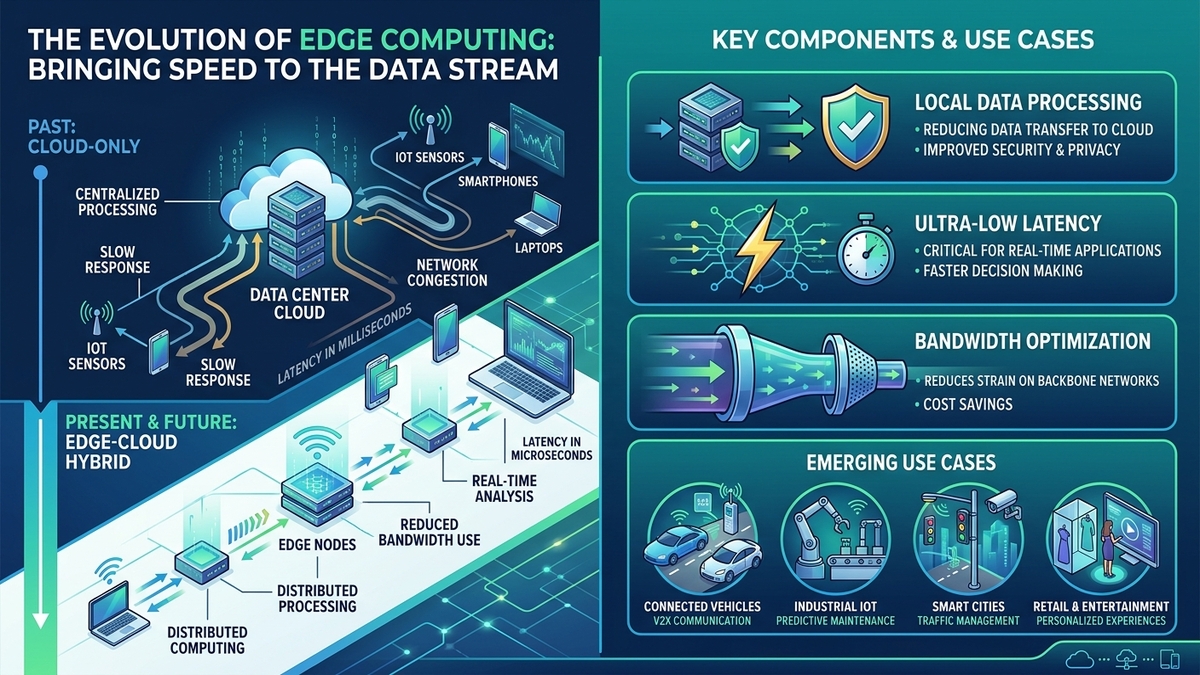
Across the global digital landscape, a fundamental structural realignment is underway. For more than two decades, the dominant trajectory of enterprise technology was one of hyper-centralization. Corporations, government agencies, and consumer platforms systematically migrated their digital operations away from local on-premises servers into a small cluster of massive, hyperscale cloud data centers. That cloud consolidation generated vast economies of scale, democratized access to raw computing power, and enabled the first generation of global digital platforms.
Yet, as the volume of machine-generated data explodes and real-time decision-making becomes an operational prerequisite, the physical limitations of centralized computing have become glaringly apparent. Shuttling petabytes of raw data across thousands of miles of fiber-optic cables introduces an inescapable bottleneck: the speed of light. When an autonomous vehicle must detect an obstacle in milliseconds, an industrial robot must adjust a high-speed assembly line, or a surgical system must respond to real-time organ movement, waiting for a remote cloud server to process and return a signal is no longer an option.
This physical friction has catalyzed the evolution of edge computing. Rather than forcing data to travel to distant data centers, edge computing moves processing power, storage, and algorithmic intelligence directly to the physical perimeter where data is created—on factory floors, inside medical devices, aboard connected vehicles, and within local municipal infrastructure. What began as a simple mechanism for caching web pages has matured into a sophisticated, highly distributed computing architecture. By embedding speed directly into the data stream, edge computing is fundamentally redefining how human society interacts with digital intelligence.
The Architectural Pendulum: From Mainframes to the Cloud and Back
To understand the current maturation of edge computing, it is necessary to examine the historical oscillation of computing topology. Over the past sixty years, the architecture of information technology has continually swung between centralization and decentralization.
The computing era began in the 1960s with total centralization: massive mainframe computers processed batch jobs submitted from dumb terminals that possessed no independent processing capacity.The personal computer revolution of the 1980s shattered that model, decentralizing compute power onto individual desktops and empowering users to execute software locally.By the late 1990s and early 2000s, the rise of the commercial internet introduced a hybrid phase, popularized by Content Delivery Networks (CDNs). Companies recognized that delivering static web content from a single origin server caused severe bandwidth congestion and slow load times. CDNs solved this by placing caching servers at the “edge” of regional telecommunications networks, closer to end users.
The 2010s witnessed a dramatic pull back toward extreme centralization with the advent of hyperscale public cloud platforms. Enterprises surrendered local server closets in favor of virtualized, infinitely scalable cloud infrastructure. However, the sheer success of the cloud model generated its own crisis. The proliferation of the Internet of Things (IoT), high-definition video surveillance, mobile devices, and industrial sensors created an unprecedented avalanche of data. Global data generation now exceeds 180 zettabytes annually.
Attempting to transmit every byte of this raw data back to centralized cloud facilities created three severe systemic pressures:
- Bandwidth Saturation: Telecommunications networks faced severe congestion as millions of connected devices continuously broadcasted raw telemetry, video streams, and sensor logs.
- Latency Constraints: Physical distance creates unavoidable network latency. While a 100-millisecond delay is imperceptible when loading an email, it represents a catastrophic failure window in high-speed industrial or safety-critical applications.
- Prohibitive Backhaul Costs: Transmitting, storing, and processing massive volumes of unrefined data in public cloud environments created escalating operational expenditures for global enterprises.
Edge computing emerged not to replace the centralized cloud, but to complete it.It represents a mature, topology-aware architecture that divides labor logically: time-sensitive, operational tasks are processed locally at the edge, while heavy computational jobs, long-term historical analytics, and global model training remain anchored in the central cloud.
The Physics of Speed: Eliminating Latency at the Point of Origin
At its core, the primary value proposition of edge computing is the radical reduction of response time. In digital communications, latency refers to the total time required for a packet of data to travel from its source across a network to a processing node and return with an actionable command.
In traditional cloud architectures, a data packet generated by an industrial sensor must traverse local local-area networks (LANs), regional Internet Service Provider (ISP) routing hubs, national fiber backbones, and cloud security gateways before reaching a virtual machine. Even on high-speed fiber connections, this round-trip routinely consumes anywhere from 50 to 150 milliseconds. Under heavy network congestion, latency spikes unpredictably.
Edge computing restructures this physical pathway by introducing localized compute tiers:
- On-Site Device Edge: Microprocessors, system-on-chip (SoC) platforms, and embedded neural processing units (NPUs) built directly into sensors, cameras, and machinery process data in microsecond timeframes without sending data over external networks.
- On-Premise Enterprise Edge: Local micro-data centers, ruggedized edge servers, and industrial gateway appliances located within a factory, hospital, or retail store process aggregated multi-device streams with single-digit millisecond latency.
- Network or Multi-Access Edge (MEC): Compute infrastructure deployed by telecommunications providers directly at cell towers and local switching centers, serving regional applications across high-speed wireless connections.
Beyond raw speed, edge architectures fundamentally change data efficiency through local compression and anomaly detection. Consider a modern offshore wind turbine outfitted with hundreds of vibration, thermal, and mechanical sensors generating gigabytes of telemetry every hour. Under a traditional cloud architecture, all that data is transmitted continuously over expensive satellite links.
Under an edge architecture, an on-site edge processor continuously analyzes the sensor streams locally. Ninety-nine percent of the data—indicating normal, routine turbine operation—is discarded or compressed into low-frequency operational summaries. Only when the edge processor detects a subtle acoustic anomaly or sudden thermal vibration spike does it trigger an immediate local safety shutdown and transmit a high-priority alert to central engineering teams. Speed is achieved not merely by moving faster, but by processing smarter at the point of origin.
The Convergent Engine: 5G, Industrial IoT, and Edge AI
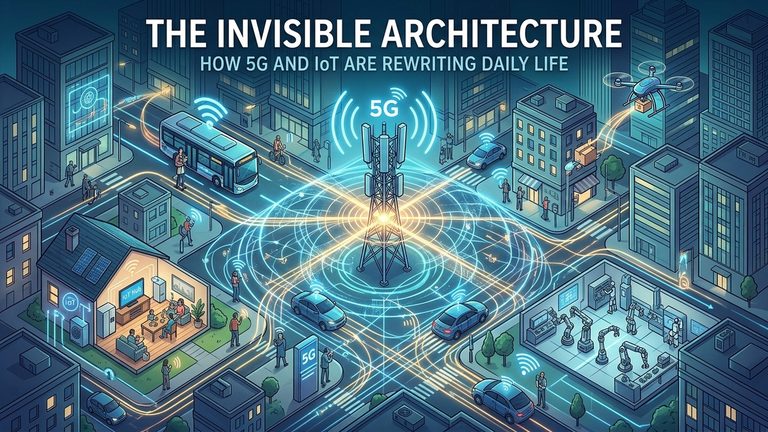
The acceleration of edge computing from a niche networking strategy into a dominant enterprise architecture is powered by the convergence of three foundational technologies: Standalone 5G networks, the Industrial Internet of Things (IIoT), and localized Artificial Intelligence (Edge AI).
The Role of 5G Networks
While early cellular generations were optimized purely for human voice and mobile web browsing, 5G was engineered specifically to connect autonomous machines. Standalone 5G infrastructure introduces two features critical to the edge ecosystem: Ultra-Reliable Low-Latency Communication (URLLC) and Network Slicing.
URLLC guarantees wireless network latency below five milliseconds with near-zero packet loss, providing the wireless connectivity required for mission-critical automation. Network Slicing allows telecommunications operators to partition a physical 5G network into isolated, virtual networks, guaranteeing dedicated bandwidth and security parameters for specialized edge workloads—such as emergency medical telemetry or smart grid management—without interference from public mobile traffic.
The Surge of Industrial IoT
The physical footprint of edge computing is driven by the expansion of industrial automation. Factories, oil refineries, logistics hubs, and energy grids are being retrofitted with billions of connected sensors. Operational Technology (OT) environments, which historically operated as isolated mechanical systems, are now fully integrated with digital networks. The volume of real-time data generated on factory floors requires local edge appliances capable of translating legacy industrial protocols, analyzing production line speeds, and executing automated quality control checks in real time.
The Maturity of Edge AI
For years, artificial intelligence was strictly confined to hyperscale data centers due to the massive computational, memory, and power requirements of deep neural networks. The emergence of compact, specialized silicon—such as low-power NPUs and specialized vision processors—alongside optimized Small Language Models (SLMs) has made Edge AI a commercial reality.
Edge AI allows machine learning models to perform complex inference locally. A high-definition security camera running Edge AI does not simply stream video to a cloud server; it executes computer vision models directly on its internal processor to detect safety hazards, identify structural micro-fractures, or log inventory movements locally.By eliminating cloud dependencies, Edge AI delivers instant analytical insights while preserving data privacy and maintaining operation even when external internet connections drop.
Sectoral Realignment: Real-World Edge Applications
The impact of edge computing is best observed across critical global industries where real-time data processing has moved from a competitive advantage to an operational baseline.
Smart Manufacturing and Predictive Maintenance
In modern automotive assembly plants and semiconductor fabrication facilities, computer vision systems running on local edge servers inspect components at micro-millimeter precision as they move along assembly lines. If a defect is identified, the edge system signals mechanical actuators to remove the component within milliseconds, preventing costly downstream assembly errors. Furthermore, predictive maintenance models analyze acoustic and vibrational signatures of heavy machinery locally, predicting mechanical bearing failures days before catastrophic breakdowns occur.
Autonomous Mobility and Transportation Grid
Self-driving vehicles represent sophisticated mobile edge nodes. A single autonomous vehicle generates terabytes of spatial data daily through radar, lidar, and high-resolution camera arrays. The vehicle must process this spatial input instantaneously to make split-second steering and braking decisions; routing sensor data through a remote cloud server would introduce deadly delays. Beyond individual vehicles, municipal Intelligent Transport Systems (ITS) deploy edge nodes at busy intersections to coordinate vehicle-to-everything (V2X) communications, dynamically adjusting traffic signal timing to clear bottlenecks and prevent collisions.
Healthcare and Remote Medical Diagnostics
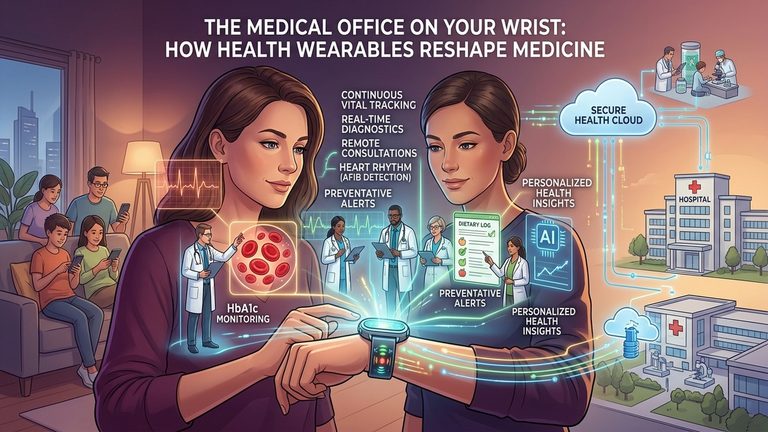
In healthcare settings, edge computing is enhancing patient outcomes while safeguarding sensitive medical records.Point-of-care diagnostic equipment, wearable vital sign monitors, and surgical suites utilize local edge processing to evaluate patient telemetry in real time. In automated patient monitoring, an edge-enabled bed sensor detects continuous micro-shifts in patient movement and respiratory trends, instantly alerting floor nursing staff to an impending fall or cardiac arrest without waiting for cloud processing cycles.
Smart Retail and Computer Vision
Retailers are utilizing edge infrastructure to bridge the gap between digital e-commerce and physical stores. In-store computer vision networks process camera feeds locally to monitor shelf inventory levels in real time, automatically notifying warehouse staff when items require restocking. Simultaneously, edge analytics engines detect loss-prevention anomalies at self-checkout kiosks, analyzing scanning motions locally to prevent checkout errors without storing intrusive video records of shoppers in central databases.
Operational Imperatives: Security, Sovereignty, and Distributed Governance
While edge computing solves critical latency and bandwidth challenges, it introduces complex operational, technical, and governance hurdles that enterprise IT departments must navigate.
Centralized Cloud Security (Single Fortified Perimeter)
                 VS.
Distributed Edge Reality (Thousands of Physical Nodes)
                 ↓
Mandatory Defense Layers:
  ├── Hardware Root of Trust & Tamper-Evident Enclosures
  ├── Zero Trust Network Access (ZTNA) & Local Encryption
  └── Automated Remote Orchestration & Fleet Management
The Expanded Physical Attack Surface
Traditional cloud security relies on securing a small number of heavily fortified, physically restricted data centers. Edge computing distributes computing infrastructure across thousands of unmonitored physical locations—on utility poles, inside retail store closets, on delivery trucks, and in remote industrial fields.
Every physical edge node represents a potential target for physical tampering, unauthorized local access, or hardware-level interception. Securing the edge requires a fundamental shift toward Zero Trust Architecture (ZTA). Edge devices must incorporate hardware-based Root of Trust (RoT) microchips, secure boot protocols, and fully encrypted local storage drives that render data inaccessible if the physical hardware is stolen or compromised.
Fleet Management and Software Orchestration
Managing software deployments, security patches, and machine learning model updates across tens of thousands of physically dispersed edge nodes presents a massive administrative burden. Traditional manual IT management techniques fail at edge scale.
Enterprises are increasingly deploying cloud-native containerization platforms—utilizing lightweight Kubernetes distributions optimized for resource-constrained environments—to manage edge infrastructure. Central IT teams use automated management software to push software updates, monitor node health, and deploy updated AI models seamlessly across global edge fleets from a single dashboard.
Data Sovereignty and Privacy Compliance
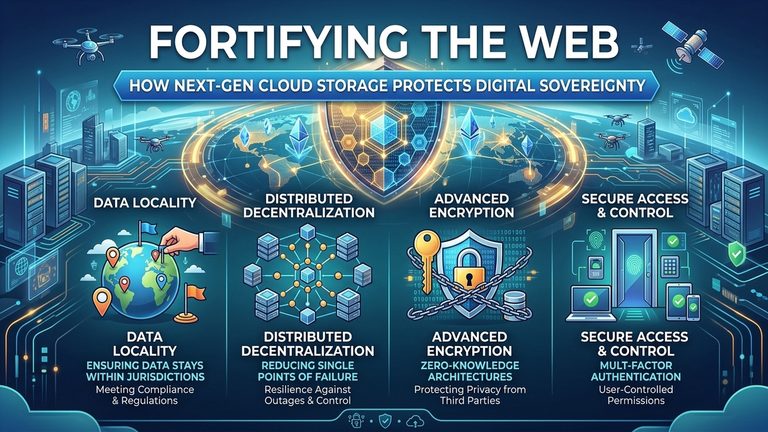
International privacy regulations—such as the European Union’s General Data Protection Regulation (GDPR) and stringent regional data localization laws—mandate that sensitive personal, financial, and healthcare data remain strictly within specific geographic borders. Edge computing provides an architectural solution to this legal challenge. By processing and storing sensitive citizen telemetry locally within regional facility boundaries, enterprises ensure that raw, identifiable data never exits local legal jurisdictions. Only anonymized, aggregated statistical summaries are transmitted to global corporate networks, aligning operational analytics with international privacy mandates.
Economic Realities: CapEx Shifts and the Hybrid Equilibrium
The economic model of edge computing requires a strategic re-evaluation of corporate technology investments. Over the past decade, the public cloud transformed enterprise IT budgets from Capital Expenditure (CapEx)—buying physical servers and networking hardware—into predictable, usage-based Operational Expenditure (OpEx).
Deploying edge computing partially reverses this dynamic. Building out distributed edge infrastructure requires up-front capital investments in physical edge appliances, ruggedized enclosures, localized power backups, and specialized micro-data center hardware. Hardware remains a dominant component of the edge computing market, accounting for a significant share of global enterprise spending as companies lay the physical foundation for localized processing.
However, this initial capital investment yields significant, long-term operational savings by drastically reducing ongoing cloud bandwidth and data egress fees. By filtering and analyzing massive data streams locally, enterprises cut their network transit costs substantially, ensuring that expensive cloud bandwidth is reserved exclusively for high-value data assets.
The future of enterprise technology is not a zero-sum competition between the cloud and the edge; it is a permanent hybrid equilibrium. Forward-looking organizations are establishing unified hybrid edge-cloud topologies. In this framework, the edge acts as the rapid-response operational tier—handling real-time execution, local safety protocols, and immediate data filtering. The centralized cloud serves as the macro-analytical tier—aggregating long-term historical data from thousands of edge nodes to train deep AI models, run global business planning, and maintain central enterprise records.
The Next Horizon of Distributed Intelligence
As microprocessors become increasingly power-efficient and wireless connectivity reaches global saturation, the boundary between physical reality and digital computation will continue to dissolve.
The next frontier of edge computing lies in neuromorphic computing and energy-harvesting microprocessors. Neuromorphic microchips—designed to mimic the event-driven biological architecture of the human brain—process sensory data using milliwatts of power. Combined with ambient energy-harvesting technologies that capture power from ambient light, thermal gradients, and radio waves, future edge sensors will operate continuously for years without requiring battery replacements or external power lines.
Simultaneously, autonomous edge networks are emerging. These systems leverage peer-to-peer mesh computing, allowing neighboring edge nodes inside a smart factory or urban grid to share processing power, memory, and bandwidth dynamically without relying on central coordination. If one edge server fails or experiences an unexpected computational overload, surrounding nodes instantly absorb the workload, ensuring continuous operational resilience.
The evolution of edge computing marks a permanent technological maturation. By stepping out of distant cloud facilities and embedding intelligence directly into the physical environments where human life and commerce occur, edge computing has bridged the gap between bits and atoms. In doing so, it has delivered more than raw computational speed—it has established the responsive, resilient, and intelligent foundation for the connected world of tomorrow.