







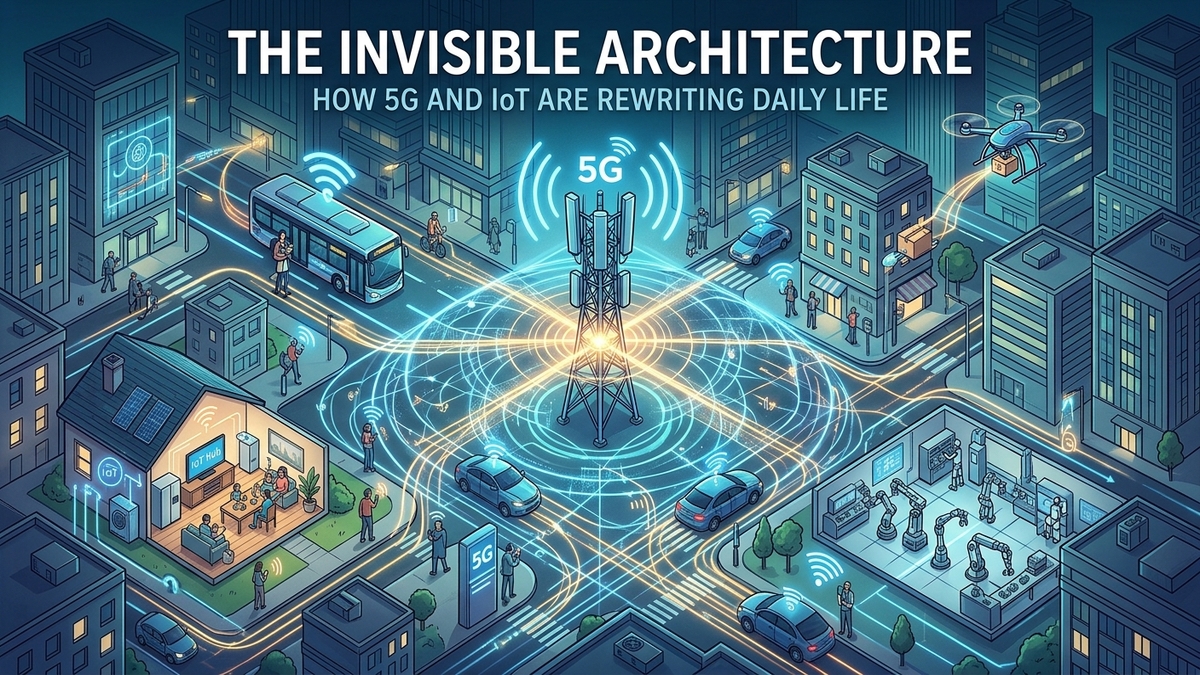
Step onto a morning commuter train in a major metropolitan hub, and the mechanics of modern life appear superficially familiar. Commuters glance at handheld screens, traffic moves through intersection grids, and municipal delivery vans navigate crowded avenues. Yet beneath this conventional surface lies a profound structural evolution. The physical environments people inhabit—from high-density urban corridors to domestic living rooms and agricultural fields—have been wrapped in a continuous, high-density digital layer.
This transformation is driven by the convergence of fifth-generation (5G) cellular networks and the Internet of Things (IoT). For the past quarter-century, the digital revolution was defined by human initiative: individuals opened web browsers, typed search queries, tapped touchscreen applications, and manually initiated transactions. Today, that interactive model is being superseded by ambient computing. High-speed, ultra-low-latency 5G infrastructure acts as a continuous nervous system, connecting tens of billions of autonomous sensors, actuators, edge processors, and mechanical systems.
The result is an invisible architecture. Technology is no longer merely a tool that humans actively consult or log into; it has become the atmospheric environment in which daily routines occur. As standalone 5G networks mature alongside increasingly compact, low-power IoT hardware, this hyper-connected fabric is quietly rewriting urban governance, energy consumption, healthcare delivery, and domestic life.
The Technical Foundations: Speed, Density, and Edge Intelligence
Understanding how 5G and IoT interact requires moving past the consumer marketing that initially framed 5G as simply a faster smartphone network. While earlier cellular generations focused primarily on increasing bandwidth for human-driven data consumption, 5G was engineered from its foundation to connect machines at scale.
The technical capabilities enabling this shift rest on three core architectural pillars defined by international telecommunications standards:
- Massive Machine-Type Communication (mMTC): Legacy wireless networks were severely constrained by device density, frequently stalling when thousands of smartphones crowded into a single stadium or urban block. Standalone 5G networks can support up to one million connected devices per square kilometer, enabling the widespread deployment of low-power sensors across entire cities.
- Ultra-Reliable Low-Latency Communication (URLLC): By reducing network response times to under five milliseconds, URLLC enables real-time feedback loops required for safety-critical applications, including autonomous vehicle coordination, remote surgical procedures, and industrial robotics.
- Network Slicing: Telecom operators can partition a single physical 5G network into multiple virtual networks, guaranteeing dedicated bandwidth, security, and latency parameters for critical public safety systems without interference from general consumer traffic.
Physical Environment
        ↓
Distributed IoT Sensors (mMTC)
        ↓
5G Network Slicing & Low-Latency Transport (URLLC)
        ↓
Edge Compute Analytics
        ↓
Automated Physical Response
Crucially, this connectivity explosion is supported by edge computing. Rather than routing massive streams of raw sensor data back to centralized public cloud datacenters thousands of miles away, processing power is increasingly situated near the network edge—on cell towers, municipal utility poles, and local enterprise servers. By analyzing data locally, systems make split-second operational decisions, turning raw environment telemetry into immediate physical actions.
The Connected City: Quiet Transformations in Public Space
The impact of this invisible architecture is most visible within modern urban centers, where municipal authorities face compounding pressures from population growth, energy costs, and climate volatility. Rather than relying on massive, disruptive infrastructure overhauls, smart cities are utilizing 5G-enabled IoT sensor arrays to optimize existing civic assets.
Consider municipal lighting systems. Traditional streetlights operated on rigid timers or basic photocells, consuming substantial electrical grid power regardless of actual street usage. In fully networked cities, streetlights function as intelligent multi-purpose nodes.Equipped with motion sensors, air quality monitors, and micro-5G transceivers, connected streetlights automatically adjust their brightness based on real-time pedestrian and vehicular movement. When streets are empty, illumination dims to conserve energy; when foot traffic approaches, lighting scales up seamlessly.
Simultaneously, these lighting arrays act as hyper-local environmental monitoring stations. Instead of relying on one or two regional weather stations to gauge air quality across an entire metropolitan region, urban managers receive continuous, street-level pollution data. This granular telemetry allows cities to identify hyper-local emission spikes, dynamically adjust traffic signal timing to divert heavy diesel vehicles away from school zones, and deploy municipal street sweepers where particulate matter accumulates.
Urban transit systems are experiencing a similar structural realignment. Cooperative Intelligent Transport Systems (C-ITS) enable continuous vehicle-to-everything (V2X) communication. Municipal bus fleets, emergency response vehicles, and connected personal cars continuously exchange telemetry with traffic light controllers, pedestrian safety beacons, and surrounding road sensors.
When an ambulance approaches a busy intersection, the surrounding network coordinates signal light sequences in real time, clearing traffic bottlenecks before the emergency vehicle arrives. In public transit, dynamic scheduling engines alter bus deployment frequencies based on real-time crowd density readings from station sensors, reducing wait times and optimizing fuel efficiency.
Water and waste management networks—historically among the most opaque components of municipal infrastructure—have been brought into continuous view. Subterranean acoustic sensors embedded along municipal water mains detect microscopic pressure drops and structural micro-vibrations, allowing maintenance crews to repair water main cracks weeks before catastrophic bursts occur. Meanwhile, connected waste utility containers monitor their own fill levels, alerting sanitation departments only when disposal is required, eliminating empty truck routes and reducing urban fleet carbon emissions.
Re-engineering the Domestic Sphere: The Autonomous Home
Inside the domestic sphere, the integration of 5G and IoT is driving a transition from reactive consumer gadgets to self-regulating living spaces. Early iterations of the “smart home” were defined by fragmented user experiences: homeowners managed a dozen disparate mobile applications to adjust individual smart bulbs, check connected doorbells, or set digital thermostats.
The maturation of universal smart home connectivity standards, paired with high-capacity 5G home gateways, has established unified domestic ecosystems. Modern residential environments process multi-sensor inputs to manage energy, security, and climate autonomously.
Energy management represents one of the most significant domestic impacts. As electrical utility providers transition toward variable peak-pricing models and renewable energy integration, smart homes act as active participants in the power grid. Connected appliances, home battery storage systems, and electric vehicle chargers communicate continuously with utility demand-response platforms.
During periods of high regional energy demand, a home’s energy management system can briefly pause non-essential cooling cycles, delay dishwasher runs, or feed stored battery power back into the local grid, shielding homeowners from surge pricing while stabilizing regional electrical infrastructure.
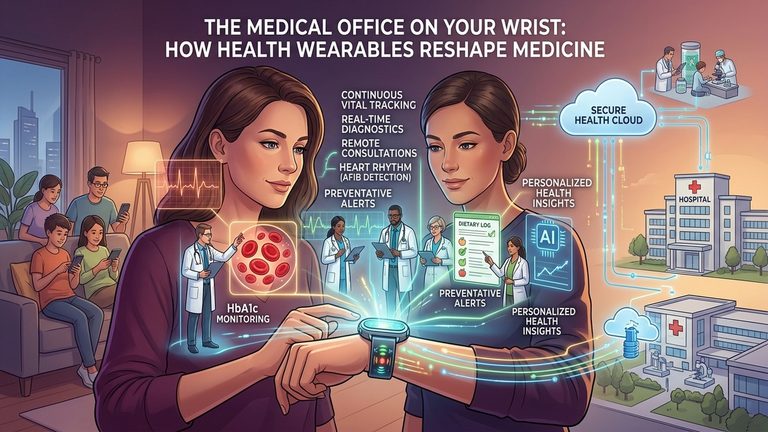
In healthcare and elder care, ambient domestic monitoring is providing non-invasive support for aging populations. Rather than forcing seniors into institutional care facilities or requiring intrusive body-worn cameras, homes equipped with radio-frequency spatial sensors and bio-impedance monitors track movement patterns, sleep quality, and respiratory trends passively.
Radar-based spatial sensors can detect a fall in a hallway or a gradual decline in daily mobility without capturing visual images, instantly alerting family members or emergency medical services. Continuous ambient health tracking shifts medicine from reactive hospital admissions toward predictive, home-based wellness maintenance.
Industrial and Agricultural Ripples: Food Systems and Global Supply Chains
While urban and domestic applications directly impact daily consumer routines, the broader economic foundation supporting modern life is being reshaped by Industrial IoT (IIoT) and agricultural automation.
In global logistics and cold-chain management, the combination of 5G tracking modules and miniature environmental sensors has transformed container shipping. Historically, cargo ships, freight trains, and long-haul delivery trucks operated with significant visibility gaps; cargo condition was verified primarily at departure and arrival points.
Today, smart shipping containers transmit real-time telemetry regarding internal temperature, humidity, shock exposure, and atmospheric gas composition throughout their journey. If a refrigeration unit on a container carrying temperature-sensitive pharmaceuticals or fresh produce begins to fail on a cargo vessel, automated alerts trigger immediate onboard maintenance or rerouting, preventing multi-million-dollar inventory losses and securing global food supply stability.
In agriculture, precision farming systems leverage 5G-connected sensor arrays across expansive field landscapes. Soil sensors embedded at varying depths measure moisture levels, nutrient density, and salinity in real time. This continuous data feed communicates directly with autonomous irrigation systems and agricultural drones, delivering micro-doses of water and targeted fertilizer exclusively to crops that require them. Agricultural studies indicate that 5G-driven precision irrigation can reduce agricultural water usage by up to 30 percent while improving crop yields, offering a crucial technology for climate-resilient food production.
On manufacturing plant floors, private 5G networks enable the deployment of “digital twins”—virtual, real-time replicas of physical machinery and production processes. Thousands of vibration, thermal, and acoustic sensors mounted on industrial equipment stream continuous operational data to local edge servers. Machine learning models analyze these streams to predict mechanical wear, scheduling maintenance hours before a critical failure disrupts factory operations.
Systemic Vulnerabilities: Cybersecurity, Privacy, and Monopoly Risks
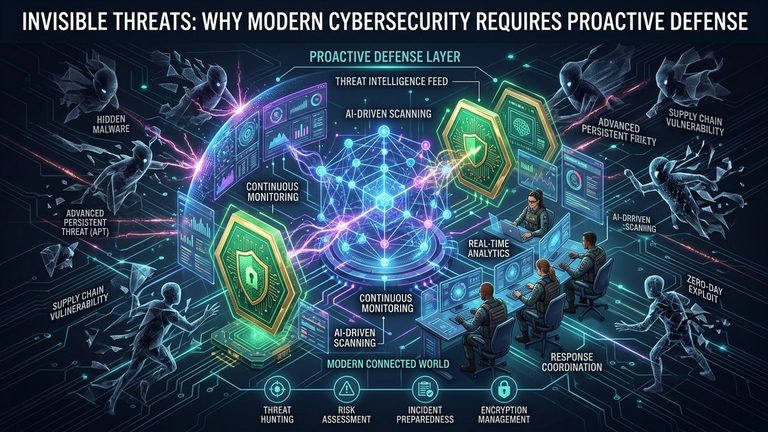
The rapid expansion of this ambient infrastructure introduces severe technical, legal, and societal challenges. By embedding billions of connected, autonomous devices into the physical fabric of daily life, society fundamentally expands its digital attack surface.
Cybersecurity has emerged as a primary systemic vulnerability. Unlike enterprise servers or personal computers, which receive regular software security updates and operate behind sophisticated corporate firewalls, many low-cost IoT devices are manufactured with minimal hardware security protections.
When millions of compromised smart cameras, connected meters, or home routers are hijacked by malicious actors, they form massive botnets capable of launching unprecedented Distributed Denial of Service (DDoS) attacks against national power grids, financial networks, and telecommunications infrastructure. Security research institutions have documented IoT-driven botnet attacks exceeding multi-terabit processing thresholds, capable of paralyzing critical web services within seconds.
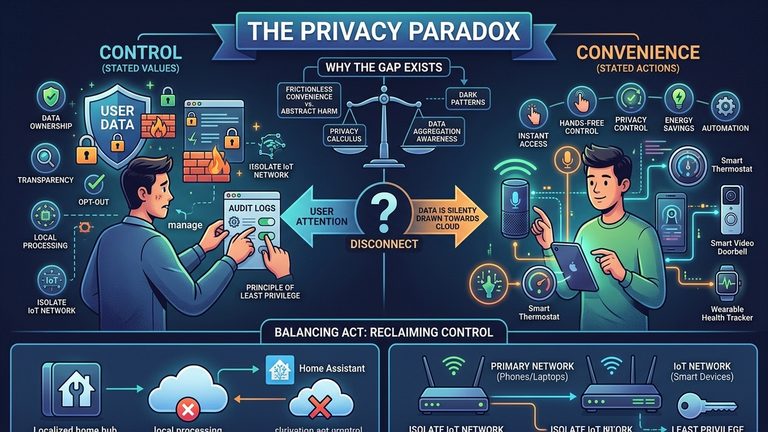
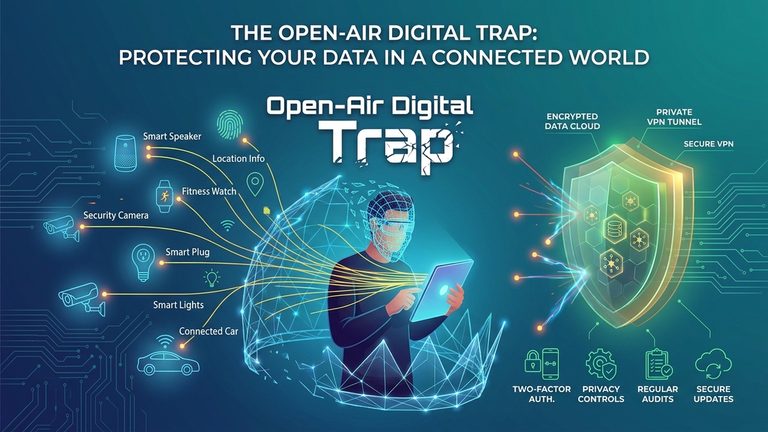
Concurrently, the pervasive nature of ambient data collection creates an acute privacy crisis. In a world governed by screen-based interactions, individuals could choose when to engage with digital tracking by opting out of website cookies or disabling smartphone location services. In an environment outfitted with ambient sensors, facial recognition cameras, and spatial radio-frequency tracking, meaningful individual consent becomes practically impossible.
Walking down a public street, sitting in a municipal park, or entering a commercial storefront triggers dozens of passive data collection events. When spatial location telemetry, mobile payment histories, and environmental camera feeds are aggregated by commercial data brokers, the resulting profiles offer an intrusive, real-time window into private human behavior.
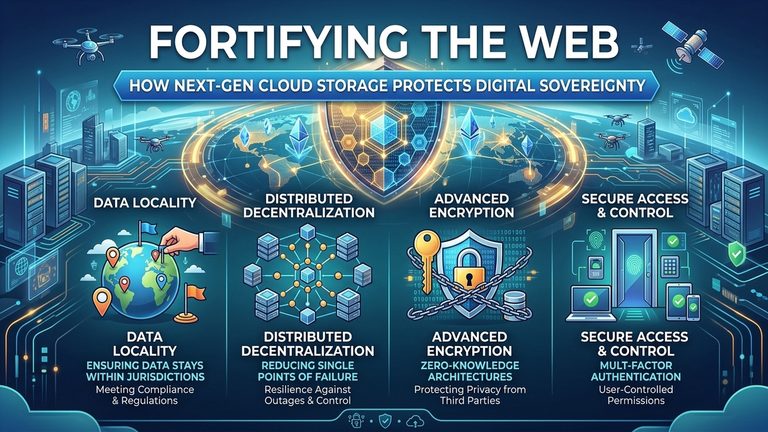
This concentration of data raises significant market competition and digital sovereignty questions. A small number of global technology conglomerates and telecommunications carriers operate the core cloud infrastructure, network backbones, and operating platforms that power this connected ecosystem.
If a central cloud platform experiences a widespread outage or alters its terms of service, the consequences ripple instantly across physical operations—locking people out of home security systems, halting public transit routes, and disabling industrial assembly lines.
Expanded Attack Surface & Low-Cost IoT Vulnerabilities
                 ↓
Risks: Massive Botnets, Ambient Surveillance & Infrastructure Outages
                 ↓
Mandate: Zero-Trust Architectures, Hardware Security & Privacy Regulations
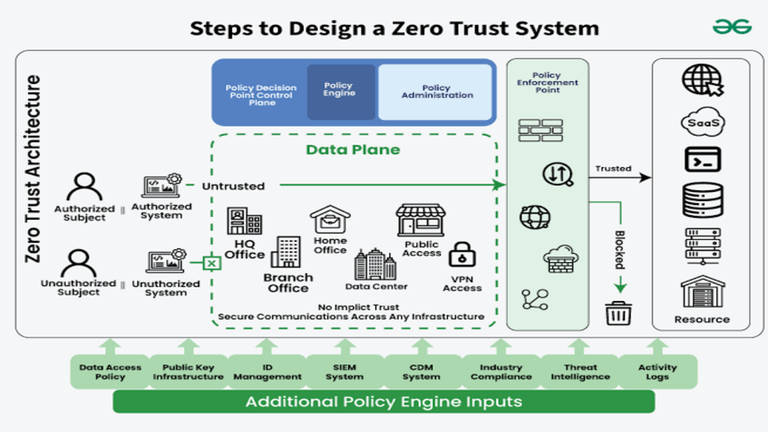
Addressing these vulnerabilities requires a fundamental shift toward zero-trust security architectures. Network operators and device manufacturers are increasingly forced by international regulatory bodies to implement mandatory hardware encryption, secure boot protocols, and automated software patch management. Furthermore, legislative frameworks like the European Union’s Cyber Resilience Act and state-level IoT security mandates across North America are establishing strict legal liability for hardware vendors that deploy unpatched, insecure connected devices into the public marketplace.
Navigating the Ambient Era
The integration of 5G and the Internet of Things represents a permanent structural realignment of human society’s relationship with technology. Digital connectivity has moved past the era of glass screens, manual inputs, and conscious online sessions, receding into the physical walls, roads, energy grids, and domestic spaces that define human existence.
The benefits of this invisible architecture are substantial: cleaner energy grids, safer municipal transport, resilient food supply chains, and non-invasive health monitoring that preserves human independence. Yet realizing these benefits without sacrificing fundamental civil liberties or infrastructure security demands rigorous, proactive stewardship.
Governments, urban planners, technology architects, and citizens must work collectively to establish enforceable privacy standards, demand resilient open-source security protocols, and ensure equitable access to modern digital infrastructure. Technology is no longer merely a tool society chooses to use; it is the invisible, autonomous environment in which society lives. The ultimate test of the ambient era will be ensuring that this powerful connected architecture remains firmly dedicated to serving human dignity, safety, and the public good.