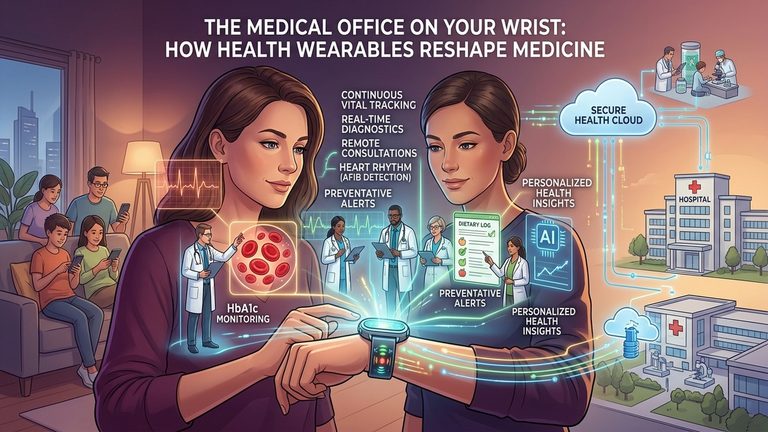









Over the past few years, smart wearables have transformed from simple step counters into sophisticated, AI-driven health companions. What used to be a niche tool for fitness enthusiasts has now become an essential everyday gadget for proactive wellness management.
Today’s smartwatches and smart rings do far more than just log your daily movement. Powered by real-time machine learning models, modern wearables analyze continuous heart rate variability (HRV), track sleep cycles with granular precision, and detect subtle shifts in skin temperature to predict potential illnesses days before symptoms appear.
From Reactive Tracking to Predictive Care
The real breakthrough in 2026 wearable technology lies in its transition from reactive data collection to predictive health insights.
- Early Warning Systems: Integrated sensors can flag cardiovascular irregularities, continuous blood glucose fluctuations, or unusual stress spikes, nudging users to seek medical advice early.
- Hyper-Personalized Coaching: AI algorithms process your sleep metrics, recovery scores, and daily exertion to automatically suggest optimal workout times, rest days, or mindfulness sessions.
- Non-Invasive Monitoring: Advanced optical and electrochemical sensors allow users to monitor metabolic markers without traditional blood samples or needle pricks.
The Future on Your Wrist
As artificial intelligence becomes lighter, faster, and more integrated into edge devices, wearable technology is shifting health management into the hands of individuals. Rather than waiting for an annual checkup, users now have a continuous, non-invasive health guardian working silently on their wrists every second of the day.